
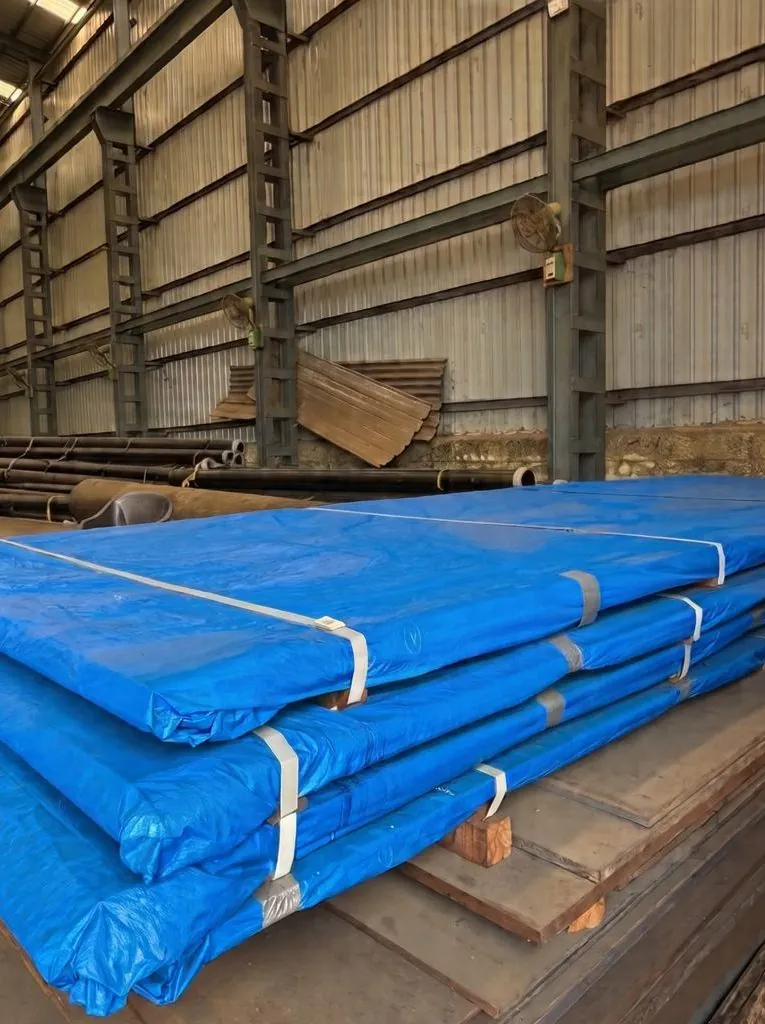
Key takeaways: petrochemical material selection at a glance
Selection follows the threat, not the grade. The alloy has to match each unit's dominant damage mechanism, temperature, pressure, H₂S, acid concentration, chloride load, and you only climb the corrosion ladder as far as the service actually demands.
A516 Gr 70 PVQ plate forms the backbone of columns, drums, separators and exchanger shells. It's normalized for low-temperature toughness and HIC-tested per NACE TM0284 for wet H₂S.
SA387 Cr-Mo alloy steel does the heavy lifting in hot-hydrogen service, hydrocrackers, hydrotreaters, reformers, resisting high-temperature hydrogen attack per the API 941 Nelson curves.
316/316L handles the bulk of CRA duty. Stabilized 321/347 steps in where sensitization at 425–815 °C and polythionic acid SCC need to be stopped. For sulfuric acid, chloride and sour streams, 904L and Incoloy 825 take over.
NACE MR0175 / ISO 15156 compliance isn't optional, and neither is an EN 10204 3.1 mill test certificate. Every grade has to arrive heat-traceable, and for sour service, in the qualified condition.
The petrochemical corrosion environment: why one grade can't do it all
A petrochemical complex isn't one environment. It's a dozen of them stacked together. A single train can run hot hydrogen at one reactor, wet H₂S in an amine absorber, hot sulfuric acid in an alkylation unit, chloride-laden cooling water in the exchangers, and cryogenic hydrocarbons at a cold separator. Each stream attacks metal through a different damage mechanism. The correct material, as a result, changes unit by unit.
The dominant threats and where they occur:
- Sour service / wet H₂S, amine systems, sour-water strippers, overhead drums: causes hydrogen-induced cracking (HIC) and sulfide stress cracking, governed by NACE MR0175 / ISO 15156.
- High-temperature hydrogen attack (HTHA), hydrocracker and hydrotreater reactors: hydrogen reacts with carbides above the Nelson-curve limits, demanding Cr-Mo steel.
- Sulfidation and naphthenic acid corrosion, crude and vacuum heaters, transfer lines: high-temperature sulfur and acidic crude fractions thin carbon and low-Cr steels.
- Acid attack, sulfuric-acid alkylation, acid condensers, regeneration: needs sulfuric-acid-resistant copper-bearing or nickel alloys.
- Chloride pitting, crevice and stress-corrosion cracking, cooling water, seawater exchangers, column overheads: ranks grades by pitting resistance and chloride SCC susceptibility.
- Polythionic acid SCC and sensitization, austenitic furnace tubes and hot lines on shutdown: prevented by stabilized or solution-annealed grades.
- Low-temperature / cryogenic embrittlement, cold separators, LPG and ethylene storage: needs normalized plate with verified Charpy toughness at design temperature.
Because deep upstream and well-stream metallurgy overlap so much, don't lump this page in with our upstream / sour oil & gas and chemical & acid processing hubs. Treat them as separate pages, and pair this one with those instead.
Grade × petrochemical map
This is the core of petrochemical material selection: which grade serves which unit, why it fits metallurgically, and the standard that governs it. Use it alongside the grade selector (enter your stream) to shortlist candidates, then request an RFQ.
| Grade | Typical units / streams | Why (metallurgical fit / threat resisted) | Standard | Form(s) |
|---|---|---|---|---|
| A516 Gr 70 PVQ plate (+ NACE-HIC) | Columns, drums, separators, storage tanks, heat-exchanger shells; amine absorbers (HIC variant) | Killed, fine-grain PVQ plate; normalized for low-temperature toughness; HIC-tested resists hydrogen-induced cracking in wet H₂S | ASTM A516 / SA-516 + A20 | Plate |
| SA387 Cr-Mo plate | Hydrocracker, hydrotreater and reformer reactors; hot high-pressure hydrogen piping | Chromium-molybdenum alloy steel resists high-temperature hydrogen attack per API 941 Nelson curves; retains strength at temperature | ASTM A387 / ASME SA-387 | Plate |
| 316L / 316 | General piping, column trays, internals, exchanger tubes, instrumentation | Austenitic CRA workhorse; 2–3% molybdenum gives pitting resistance (PREN ~24) that 304 lacks; 316L keeps the weld HAZ corrosion-resistant | ASTM A240 / ASME SA-240 | Plate, sheet, coil |
| 321 / 347 stabilized | Furnace and heater tubes, hot gas lines, expansion joints, high-temperature service | Titanium/niobium stabilization ties up carbon, resisting intergranular corrosion and polythionic acid SCC on shutdown; serves above 425 °C | ASTM A240 / ASME SA-240 | Plate, sheet, coil |
| 904L super-austenitic | Sulfuric-acid alkylation, acid condensers, chloride + acid streams, scrubbers | ~25% Ni, ~4.5% Mo, copper-bearing (PREN ~34); copper drives reducing-acid resistance; outperforms 316L in chloride SCC | ASTM A240 / ASME SA-240 | Plate, sheet, coil |
| Incoloy 825 (UNS N08825) | Sour gas (H₂S), amine and overhead systems, reducing + oxidizing acid service, pollution control | Ni-Fe-Cr alloy, Ti-stabilized; conforms to NACE MR0175 / ISO 15156; resists both reducing and oxidizing acids where 316L/904L fall short | ASTM B424 / SB-424 | Plate, sheet (coil limited) |
| Alloy 20 / Hastelloy C276 | Severe hot sulfuric/mixed-acid duty, high-chloride and wet-chlorine streams (catalog) | Step beyond super-austenitic when concentrated hot acids or high chlorides exceed 904L/825 limits | ASTM B462 / B575 | Plate, pipe, fittings |
A516 Gr 70 (PVQ carbon plate)
A516 Gr 70 PVQ plate is the carbon-steel backbone of a petrochemical plant, pressure-vessel shells, columns, drums, separators, storage tanks and heat-exchanger shells. It is a killed, fine-grain pressure-vessel steel conforming to ASTM A516 / ASME SA-516 with ASTM A20 general requirements. Two things buyers under-specify: for low-temperature vessels you need normalized plate with Charpy impacts at the design temperature, not as-rolled; and for wet H₂S you must call out the HIC-tested (NACE TM0284) variant, not plain Gr 70. State the plate thickness up front, mechanical minimums and the normalizing requirement vary with section. See our guide on how to specify A516 for pressure vessels.
SA387 Cr-Mo alloy steel
SA387 Cr-Mo plate is the high-temperature, high-pressure hydrogen material, hydrocrackers, hydrotreaters and catalytic reformers. Its chromium-molybdenum chemistry (grades 11, 12, 22) resists high-temperature hydrogen attack: above the API 941 Nelson-curve limits, atomic hydrogen reacts with iron carbides and decarburizes plain carbon steel, so Cr-Mo is specified to keep carbides stable at service temperature. It also retains creep strength where austenitic stainless is not warranted. Select the grade against the design hydrogen partial pressure and metal temperature.
316 / 316L austenitic
316L is the corrosion-resistant workhorse for general petrochemical piping, trays, internals and exchanger tubes. Its 2–3% molybdenum delivers pitting resistance (PREN ~24) that 304 lacks, while remaining readily weldable and formable. Buyers often pay for 316 where dry, non-chloride duty would allow 304, or under-spec 316 for hot concentrated chlorides where 904L or duplex is really needed. The molybdenum is what you are buying; match it to the real pitting risk. Use the low-carbon 316L for welded work to keep the heat-affected zone corrosion-resistant.
321 / 347 stabilized austenitic
Stabilized 321 / 347 are the high-temperature austenitics, furnace and heater tubes, hot gas lines and expansion joints where metal sits in the sensitization range of 425–815 °C. Titanium (321) or niobium (347) ties up carbon as stable carbides, so chromium is not depleted at grain boundaries. This resists intergranular corrosion and, critically for refinery/petrochemical units, polythionic acid SCC that attacks sensitized austenitics when sulfide scales react with air and moisture during shutdown. Where a part cannot be stabilized, specify solution-annealed material instead.
904L super-austenitic
904L super-austenitic stainless (see the 904L hub) handles acids and chloride-heavy streams: sulfuric-acid alkylation units, acid condensers, scrubbers. It carries roughly 25% nickel and 4.5% molybdenum, plus a copper addition, for a PREN around 34. That chemistry lets it resist sulfuric acid across a broad concentration and temperature range, and it outperforms 316L in chloride SCC. Engineers often reach for Alloy 20, 625 or titanium out of habit. That's usually a mistake. 904L's copper-bearing chemistry already covers the same duty for less money, so check the acid concentration and temperature against the 904L iso-corrosion limits before paying for an upgrade you don't need. Nandini is ISO-certified in 904L and supplies genuine mill plate from Aperam, Outokumpu and Jindal.
Incoloy 825 (Ni-Fe-Cr)
Incoloy 825 (UNS N08825), see the Incoloy 825 hub, is the nickel alloy for sour service and mixed-acid duty: sour-gas (H₂S) lines, amine and overhead systems, and reducing + oxidizing acid streams. It is a titanium-stabilized Ni-Fe-Cr alloy that conforms to NACE MR0175 / ISO 15156 and conforms to ASTM B424 / ASME SB-424. Buyers routinely call it "Inconel 825", it is Incoloy / Alloy 825; getting the designation right on the PO and MTC avoids receiving-inspection disputes. Its combined resistance to reducing and oxidizing acids is why it is chosen over 316L/904L in mixed-acid and sour duty, as our Incoloy 825 vs Inconel 625 comparison shows.
When you need more: Alloy 20, Hastelloy C276
Where concentrated hot acids, mixed acids or high chlorides exceed what super-austenitic and 825-class alloys tolerate, step up to Alloy 20 for hot sulfuric-acid service or Hastelloy C276 for wet-chlorine and severe mixed-acid environments. These are catalog alloys stocked to order, confirm the exact medium, concentration and temperature so the alloy is not over- or under-specified.
Match the grade to the threat
Petrochemical selection comes down fastest to one thing: the dominant damage mechanism. Each rule below names the recommended grade, plus the standard or test that governs it.
| Damage mechanism | Recommended grade(s) | Governing standard / test |
|---|---|---|
| Sour service (wet H₂S), HIC / SSC | A516 Gr 70 NACE-HIC plate; Incoloy 825 | NACE MR0175 / ISO 15156; HIC per NACE TM0284 |
| High-temperature hydrogen attack (HTHA) | SA387 Cr-Mo (Gr 11/12/22) | API 941 Nelson curves |
| Acid service (sulfuric / phosphoric / reducing) | 904L; Alloy 20; Incoloy 825 | Sulfuric-acid resistance data; ASTM A240 / B424 |
| Chloride pitting & crevice; chloride SCC | PREN ladder: 316L → 904L → Incoloy 825 | Pitting / chloride SCC |
| Polythionic acid SCC & sensitization | Stabilized 321/347 or solution-annealed grades | Sensitization; ASTM A262 (IGC) |
| Low-temperature / cryogenic toughness | Normalized A516 Gr 70 | Charpy impact at design temperature; A20 |
Sour service (wet H₂S)
In wet H₂S, atomic hydrogen gets into the steel and brings on hydrogen-induced cracking and sulfide stress cracking. Specify sour service materials to NACE MR0175 / ISO 15156. For vessels, that means A516 Gr 70 HIC-tested plate (NACE TM0284); for the most aggressive sour-acid streams, use Incoloy 825. Keep a PWHT and hardness survey on the record.
High-temperature hydrogen (HTHA)
Above the API 941 Nelson-curve limits, hydrogen decarburizes plain carbon steel and causes fissuring. For hydrocracker and hydrotreater pressure boundaries, engineers turn to SA387 Cr-Mo alloy steel, chosen against the design hydrogen partial pressure and metal temperature.
Acid service (sulfuric / phosphoric / reducing)
For sulfuric-acid alkylation, acid condensers and regeneration loops, 904L handles most concentration and temperature windows. Step up to Alloy 20 or Incoloy 825 when the acid runs hottest or most reducing. Check the medium against published sulfuric-acid resistance iso-corrosion data before you upgrade.
Chloride pitting & SCC
Cooling water systems, seawater exchangers and column overheads get ranked by chloride load. As chlorides and temperature climb, you move up the ladder from 316L to 904L to Incoloy 825. Austenitic grades stay vulnerable to chloride SCC, though, so don't forget to account for both pitting and crevice corrosion at gaskets and under deposits.
Polythionic acid SCC & sensitization
Austenitic stainless steel that sensitizes between 425 and 815 °C cracks when sulfide scales react with air and moisture during shutdown. Specify stabilized 321/347 or solution-annealed material. Where required, verify with ASTM A262, see how to prevent sensitization.
Low-temperature / cryogenic toughness
Cold separators and LPG/ethylene storage need plate that stays ductile at design temperature. Specify normalized A516 Gr 70, with Charpy impact values verified at the service temperature. Don't accept as-rolled material.
PREN & the corrosion ladder for petrochemical streams
Pitting Resistance Equivalent Number (PREN = %Cr + 3.3×%Mo + 16×%N) ranks austenitic and nickel alloys for chloride and acid streams. Climb the ladder only as far as the service demands. See PREN explained and the PREN guide for more.
| Grade | Approx. PREN | Choose when |
|---|---|---|
| 304 / 304L | ~18 | Non-chloride, non-acid utility duty only, the floor a petrochemical plant climbs above |
| 316 / 316L | ~24 | General piping and internals with moderate chlorides; the CRA workhorse |
| Duplex 2205 | ~35 | Higher strength + chloride-SCC resistance where austenitic SCC is a risk |
| 904L | ~34 | Sulfuric-acid and high-chloride streams; reducing-acid duty via copper |
| Incoloy 825 | ~31–40 | Sour (H₂S) service and mixed reducing/oxidizing acids |
| Super-Duplex 2507 | ~43 | Seawater and the most aggressive chloride duty |
For full UNS, Werkstoff, and JIS equivalents across these grades, see the UNS / Werkstoff cross-reference.
Forms & products we supply for petrochemical
Nandini keeps the full ladder in stock across flat and long product forms, all ex-stock and ready for immediate dispatch. Before sending an RFQ, run the numbers through the plate weight calculator to estimate tonnage.
| Form | Typical petrochemical use | Grades supplied |
|---|---|---|
| Plate | Vessels, columns, drums, exchanger shells, reactors | A516 Gr 70 (+NACE-HIC, +normalized), SA387, 316L, 321/347, 904L, Incoloy 825 |
| Sheet | Trays, internals, linings, ducting | 316L, 321/347, 904L, Incoloy 825 |
| Coil | Fabrication stock, tube/plate feedstock | 316L, 904L, Incoloy 825 (limited) |
| Pipe | Process piping, headers, hot gas lines | 316L, 321/347, 904L, Incoloy 825, Hastelloy |
| Pipe fittings / forged fittings | Elbows, tees, reducers, couplings | 316L, 321, 904L, Incoloy 825, Hastelloy |
| Flanges | Pressure-boundary connections | 316L, 321, 904L, Incoloy 825, Alloy 20 |
| Round bar / fasteners | Shafts, internals, bolting for sour/acid service | 316L, 904L, Incoloy 825, Hastelloy |
Standards & specifications for petrochemical materials
Every grade listed here traces back to a named international standard, and the certificate cites it by number.
| Standard | Applies to |
|---|---|
| ASTM A240 / ASME SA-240 | Austenitic & super-austenitic stainless plate/sheet/coil, 316/316L, 321/347, 904L |
| ASTM B424 / ASME SB-424 | Incoloy 825 (Ni-Fe-Cr) plate, sheet and strip |
| ASTM A516 / SA-516 + ASTM A20 | A516 Gr 60/70 PVQ carbon-steel plate for pressure vessels |
| NACE MR0175 / ISO 15156 | Metals for H₂S-containing (sour) service, hardness, PWHT, qualified condition |
| EN 10204 3.1 mill test certificate | Documentary traceability level supplied with every order (3.1, or 3.2 on request) |
Testing, inspection & traceability
For petrochemical work, the certificate counts for just as much as the metal itself. Nandini supplies genuine mill plate from Aperam, Outokumpu, Jindal, POSCO, Nippon Steel and JFE. Every order comes with an EN 10204 3.1/3.2 mill test certificate, so each heat can be traced back to its chemistry and mechanicals. More on this at testing: MTC, NDT, PMI and material traceability.
Mill test certificate, EN 10204 3.1 by default, with 3.2 third-party endorsement available on request; see how to read a mill test certificate for the MTC details.
- Positive material identification (PMI), grade confirmation at receiving for critical alloys.
- Volumetric NDT, ultrasonic (UT) and radiographic (RT) testing to the order specification.
- Sour-service documentation, HIC testing per NACE TM0284 and hardness/PWHT survey records for NACE MR0175.
- Intergranular corrosion, ASTM A262 practice for sensitization-critical austenitics.
See our quality assurance process, check the mill test certificate reference, and review our current certifications.
Why source petrochemical materials from Nandini
Petrochemical buyers want one supplier who can cover the whole corrosion ladder, from carbon PVQ and Cr-Mo through austenitic, super-austenitic and nickel alloy, all with consistent traceability. Nandini Steel has been around since 2003. It holds ISO 9001:2015 certification as a stockist and supplier (Certificate No. 1283438, Unitas Certification Services UCS-UK, valid to 11 January 2028), and it's a certified specialist in 904L, Alloy 28, Incoloy 800 and Hastelloy.
Full-ladder stock, ex-stock. We hold A516 Gr 70 (plus NACE-HIC and normalized), SA387, 316/316L, 321/347, 904L and Incoloy 825 across plate, sheet, coil, pipe, fittings, flanges, bar and fasteners. All of it ships immediately.
Traceability moat. Every order comes with genuine mill material and an EN 10204 3.1/3.2 MTC. Ask and we'll add PMI, UT/RT, HIC (NACE TM0284) and IGC (ASTM A262).
- Proven reach. 307+ projects, 260+ clients and 36+ export countries over 20+ years.
Specialist experience. We keep catching the same mis-spec: 304 or plain 316 called out where hot chlorides or acids really demand 904L/825. Plain A516 shows up too, in jobs that actually need the sour-service HIC variant. Confirm the stream before the PO goes out.
Request live pricing and availability by RFQ. See about Nandini and how to import steel: Incoterms & documentation.