Nandini Steel is an ISO 9001:2015 certified stockist and supplier of stainless steel since 2003, holding 9 grades ex-stock in Mumbai with EN 10204 3.1/3.2 mill test certificates and full heat-to-cast traceability. The range spans the 300-series workhorses 304 and 316, their low-carbon 304L and 316L variants, stabilized 321 and 347, heat-resistant 310 and super-austenitic 904L.
We cut, slit and supply to your dimensions and ship worldwide with full export documentation. Browse the range below, then send your grade, form, size and quantity for a same-day quotation.
Stainless steel grades: what buyers mean by SS 304 and SS 316
Stainless steel grades range from basic chromium-nickel austenitic types to super-austenitic and heat-resistant alloys, and SS is simply the common shorthand for stainless steel: SS 304 and SS 316 are the two grades buyers specify most often, usually before checking whether either one actually matches the service they are designing for. The amount of chromium, nickel and molybdenum in a grade is what separates one that lasts decades from one that pits within a season. Nandini Steel has stocked stainless flat products out of Mumbai since 2003, ex-stock for immediate dispatch, with EN 10204 3.1/3.2 mill test certificates on every order and an ISO 9001:2015 certification (Cert No. 1283438) that names 904L as a certified specialty grade.
Austenitic stainless steel grades: 304, 304L, 316, 316L, 321, 347
Austenitic stainless steel grades form the largest family on this page, built around a chromium-nickel structure that stays non-magnetic and ductile across a wide temperature range. SS 304 is the general-purpose workhorse for dry, indoor and non-chloride duty, but it is susceptible to pitting at a relatively low PREN of around 18, so it should never be the default choice near coastal air or chloride-bearing process. SS 304L caps carbon at 0.03 percent, preventing sensitization in welded fabrications held between 425 and 815 degrees Celsius, the band where untreated 304 loses corrosion resistance right at the weld.
SS 316 adds 2 to 3 percent molybdenum over 304, lifting PREN to roughly 24 and giving real pitting resistance in marine, chemical and pharmaceutical service. SS 316L is the low-carbon version for welded pharma and food equipment, keeping the heat-affected zone corrosion-resistant without a post-weld anneal. SS 321 and SS 347 are stabilized grades that resist sensitization at elevated temperature without relying on an L-grade's carbon limit, a common substitute for 304 or 316 in continuously hot, welded assemblies.
Super-austenitic: 904L
SS 904L is a super-austenitic grade (UNS N08904) built around roughly 25 percent nickel, 4.5 percent molybdenum and 1.5 percent copper, giving it a PREN near 34 and genuine resistance to sulfuric acid and severe chloride pitting and crevice attack. The copper addition is what lets 904L outperform 316L in chloride stress-corrosion cracking and sulfuric-acid duty, at lower cost than stepping straight to a 6-Mo alloy or titanium. 904L is part of our ISO 9001:2015 certified specialty scope, stocked in plate, sheet and coil for sulfuric-acid plants, pharmaceutical process equipment, pulp and paper and flue-gas desulfurization work.
Heat-resistant grades: 310, 316Ti
SS 310 carries a higher chromium-nickel balance than the 300-series workhorses, giving it the oxidation resistance needed for furnace and high-temperature process components where 304 or 316 would scale. SS 316Ti is a titanium-stabilized version of 316, holding corrosion resistance and strength at elevated temperature in applications such as high-temperature sulfuric acid and dye-process equipment where an unstabilized 316 weld could sensitize over time.
How to choose a stainless steel grade
Choosing a stainless steel grade comes down to four questions asked in order: what is the service, what chlorides or acid concentration will the surface see, what temperature range does it run at, and does it get welded. A dry indoor frame needs nothing more than 304. Coastal air, mild chemical exposure or marine spray calls for 316 or 316L. Sulfuric acid, high chloride concentration or hot chloride service points to 904L. Continuous welded service between 425 and 815 degrees Celsius calls for an L-grade or a stabilized grade like 321 or 347. Run your specification through our grade selector tool, and for the most common decision, our 304 vs 316 comparison breaks down the molybdenum difference line by line.
| Grade | Family | Approx. PREN | Typical use |
|---|---|---|---|
| 304 / 304L | Austenitic | ~18 | General fabrication, architectural, food and dairy |
| 316 / 316L | Austenitic | ~24 | Marine, chemical, pharma, food |
| 904L | Super-austenitic | ~34 | Sulfuric acid plants, pharma, pulp and paper, FGD |
Stainless steel by form: plate, sheet and coil
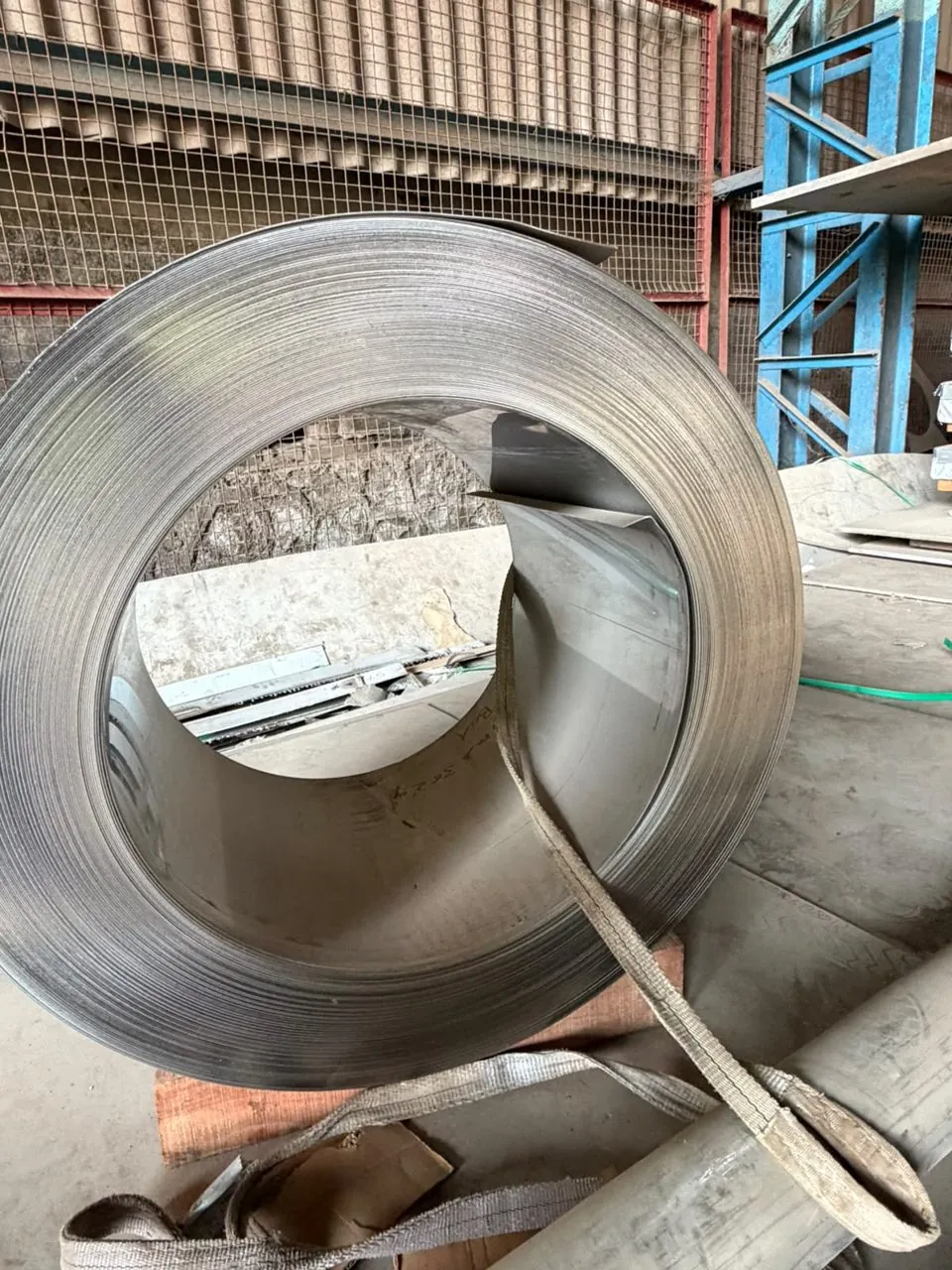
Every grade on this page ships ex-stock as plate, sheet or coil from our Mumbai stock. 304 plate and 304 sheet cover general fabrication, 316 plate and 316 coil carry the bulk of chemical and marine process work, and 904L plate, 904L sheet and 904L coil serve sulfuric-acid and severe-chloride installations. Each form ships with EN 10204 3.1/3.2 mill test certificates traceable to heat number, quoted against your exact thickness, width and quantity rather than a published price list.
Browse stainless steel