
Key Takeaways: Grade Selection at a Glance
- 316/316L is the chemical-plant baseline: its 2–3% molybdenum resists pitting in mild acids and moderate chlorides, but it is susceptible to chloride stress-corrosion cracking and strong sulfuric acid.
- 904L super-austenitic is the upgrade for sulfuric acid and higher chlorides, copper-bearing, ~4.5% Mo, ~25% Ni, PREN ~34, and it outperforms 316L on chloride SCC resistance.
- Incoloy 825 (UNS N08825) resists both reducing and oxidizing acids and conforms to NACE MR0175 / ISO 15156 for sour streams, thanks to 38–46% nickel with Mo, Cu and Ti stabilization.
- Alloy 20 and Hastelloy C276/C22 sit at the top of the ladder for hot concentrated sulfuric, hydrochloric and mixed-acid duty.
- A516 Gr 70 is the carbon-steel pressure shell, clad or weld-overlaid with a corrosion-resistant alloy for tanks, reactors and columns.
- Every order ships with an EN 10204 3.1/3.2 mill test certificate and full heat traceability.
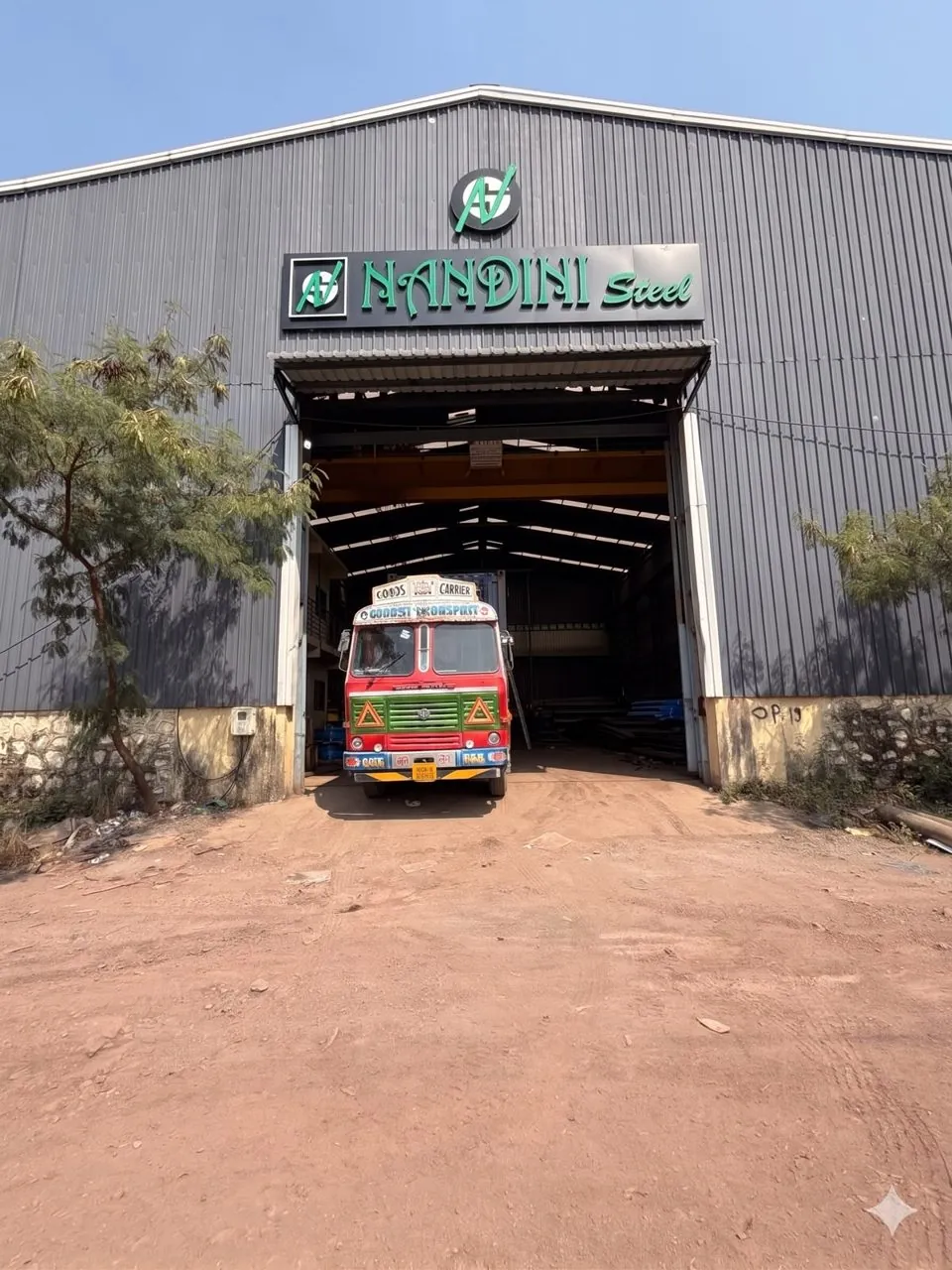
Nandini Steel is an ISO 9001:2015-certified stockist and supplier, with 904L, Alloy 28, Incoloy 800 and Hastelloy among its certified specialties. These grades sit ready in stock for immediate dispatch. The company also supplies genuine mill plate from Aperam, Outokumpu, Jindal, POSCO, Nippon Steel and JFE.
What Chemical Processing Demands of a Metal
Choosing the right material for chemical and acid process equipment really comes down to one question: which corrosion-resistant alloy can survive this particular stream? That depends on acid type and concentration, operating temperature, chloride level, and whether you're dealing with an oxidizing or reducing environment. Over-specify, and you've wasted capital. Under-specify, and the vessel fails. As conditions get more aggressive, the right answer climbs the corrosion ladder.
Why Ordinary Stainless Fails
Standard 304 has a PREN near 18, and it pits readily once chlorides climb. That's why it sits at the floor of the ladder rather than counting as a true chemical-service grade. Even 316 remains susceptible to chloride stress-corrosion cracking, and strong sulfuric acid will attack it too. Design against pitting, crevice corrosion, chloride SCC, intergranular attack at welds, and direct acid dissolution. Correct grade selection starts with understanding the types of corrosion at play.
Grade-Selection Map: Which Steel for Which Chemical
This page's core asset is simple: match the medium to the grade, then link through to the money page that holds the full specification. If a common grade won't hold up, the passage says so outright.
| Process medium | Recommended grade(s) | Why (metallurgical fit) | Grade page |
|---|---|---|---|
| Dilute / warm sulfuric acid | 904L; Alloy 20 | 904L resists sulfuric acid via ~1.5% copper; 316L is attacked, avoid | 904L super-austenitic |
| Hot / concentrated sulfuric acid | Alloy 20; Hastelloy C276 | Beyond 904L's iso-corrosion limit; high-Ni/Mo alloys required | Alloy 20 |
| Hydrochloric acid | Hastelloy C276 / C22 | Reducing acid; only Ni-Mo-Cr alloys resist, stainless is not suitable | Hastelloy C276 |
| Phosphoric acid (with chlorides/fluorides) | 904L; Incoloy 825 | High Mo + Cu + Ni resist mixed-contaminant wet-process acid | Incoloy 825 |
| Nitric / oxidizing acids | 304L; 316L; Incoloy 825 | Chromium passive film resists oxidizing acids; low carbon guards welds | 316L stainless steel |
| Organic acids (acetic, formic) | 316L; 904L | 316L suitableFor most organics; step to 904L with halide contamination | 904L plate |
| Caustic / NaOH | 316L; nickel alloys (hot/strong) | Austenitic SS suitableFor moderate caustic; Ni alloys for hot concentrated | nickel alloys |
| High-chloride / seawater-contaminated | 904L; Incoloy 825 | PREN ~34 and raised Ni resist chloride pitting and SCC that defeat 316 | 904L coil |
| Sour / H2S service | Incoloy 825; A516 Gr 70 HIC shell | 825 conformsTo NACE MR0175/ISO 15156 and resists both acid regimes | Incoloy 825 coil |
The underlying order is a PREN ladder: you climb it as sulfuric strength rises, as chloride level rises, as temperature rises. Not familiar with the metric yet? Check out PREN explained.
| Grade | PREN | Signature strength | Choose when |
|---|---|---|---|
| 304 / 304L | ~18 | General fabrication | No chlorides, no acid aggression, the floor, not a chemical grade |
| 316 / 316L | ~24 | Mo-bearing pitting resistance | Mild acids, moderate chlorides |
| 904L | ~34 | Sulfuric acid + chloride resistance | Sulfuric duty, higher chlorides, chloride SCC risk |
| Duplex 2205 | ~35 | Strength + SCC resistance | When higher strength is needed alongside chloride resistance |
| Incoloy 825 | ~31–40 | Reducing + oxidizing acids, sour | Mixed-acid and sour-gas streams |
| Alloy 20 | ~40+ | Hot sulfuric acid | Concentrated / hot sulfuric beyond 904L |
| Hastelloy C276 | ~70 | Hydrochloric, mixed acids | The harshest reducing and mixed-acid duty |
316 / 316L Stainless: the Chemical-Plant Baseline
316/316L is the standard choice for process equipment that handles mild acids and moderate chloride exposure. The real reason you're paying for it is the 2–3% molybdenum content, which delivers the pitting resistance (PREN ~24) that 304 simply doesn't have. But it has real weaknesses too. It's vulnerable to chloride stress-corrosion cracking, and strong or hot sulfuric acid will dissolve it outright.
A common mistake buyers make is paying for 316 when dry, indoor, non-chloride service would do fine with 304. The opposite error happens too: under-specifying 316 for hot, concentrated chlorides where 904L or duplex is actually needed. For welded fabrications, go with 316L (C ≤ 0.03%). That keeps the heat-affected zone corrosion-resistant without needing post-weld annealing. As for the low-chloride, high-purity end of things, that belongs to pharmaceutical / hygienic service, and we'll hand that off to the page covering it.
Full composition, mechanical and form data: 316L stainless steel.
904L Super-Austenitic: the Sulfuric-Acid & Chloride Upgrade
904L (UNS N08904, WNr 1.4539) is the step up once 316L runs out of margin. Its copper-bearing chemistry, with roughly 4.5% molybdenum, gives it genuine sulfuric-acid resistance. Nickel content near 25% pushes the chloride stress-corrosion-cracking threshold well past 316L's own. With a PREN around 34, it shrugs off the chloride pitting and crevice corrosion that defeat 316.
The classic specification error is reaching for Alloy 20, Inconel 625 or titanium for sulfuric-acid and high-chloride duty, when 904L already handles it for less money. Check the acid concentration and temperature against the 904L iso-corrosion limits before you pay for an upgrade you don't need. The opposite mistake happens too: don't under-specify 904L where the job genuinely calls for a 6-Mo grade or super-duplex. For the fundamentals, read our super-austenitic stainless primer.
Nandini Steel is the certified 904L specialist and keeps Aperam/Outokumpu 904L plate and coil ex-stock. Full data and forms: 904L plate · 904L coil.
Incoloy 825: Reducing + Oxidizing Acids & Sour Streams
Incoloy 825 (UNS N08825, WNr 2.4858) is a nickel-iron-chromium alloy carrying 38–46% Ni, 2.5–3.5% Mo, and 1.5–3% Cu, with titanium added for stabilization. That mix is exactly why engineers reach for it over 316L and 904L in mixed-acid and sour-gas service. It stands up to reducing acids and oxidizing ones alike, and it meets NACE MR0175 / ISO 15156 for sour service.
Buyers routinely call it "Inconel 825," but the correct designation is Incoloy / Alloy 825. Getting this right on the PO and MTC avoids receiving-inspection disputes. For sour service, cite NACE MR0175 on the order, so the heat gets supplied in the qualified condition. See the UNS / Werkstoff cross-reference for equivalents.
Full data and forms: Incoloy 825 · Incoloy 825 coil.
When You Need More: Alloy 20, Hastelloy C276/C22
At the top of the ladder sit alloys reserved for the harshest streams: hot and concentrated sulfuric acid, hydrochloric acid, and mixed acids where even super-austenitic stainless dissolves. Alloy 20 is the classic hot-sulfuric grade. Hastelloy C276 and Hastelloy C22, by contrast, are the Ni-Mo-Cr workhorses for reducing acids such as hydrochloric. Reach for them only once concentration and temperature exceed the proven limits of 904L and 825. Stepping up unnecessarily costs money.
The Vessel Itself: A516 Gr 70 & Clad Plate
Most chemical vessels are not solid corrosion-resistant alloy. The pressure shell is PVQ carbon steel, typically ASTM A516 Gr 70, with a corrosion-resistant alloy applied as roll-bonded clad plate or weld-overlay lining on the process side. This pairs an economical, code-qualified shell with a thin CRA barrier where the chemistry demands it.
Buyers often skip two things they shouldn't. First, impact testing: for low-temperature vessels, you need normalized plate with Charpy values at the design temperature. Second, sour service, specify the HIC-tested variant per NACE TM0284, not plain Gr 70. For the pressure-boundary design and code rules, our pressure vessels hub covers it.
Corrosion Mechanisms in Chemical Service
Every grade recommendation above answers a specific failure mechanism. Design against the wrong one, and a 20-year vessel turns into a warranty claim.
Pitting & Crevice Corrosion
Localized breakdown of the passive film under chlorides produces pits and under-deposit/gasket crevice attack. Resistance gets ranked by PREN = Cr + 3.3×Mo + 16×N, the number that sets the order on the ladder. See pitting corrosion and crevice corrosion.
Chloride Stress-Corrosion Cracking
Austenitic stainless under tensile stress in hot chloride can crack even when general corrosion looks mild. Raise the nickel content and the threshold climbs, which is why 904L and the nickel alloys outperform 316L here. Details: chloride stress-corrosion cracking.
Intergranular Corrosion / Sensitization
Holding stainless steel at 425–815 °C, which happens during welding, can precipitate chromium carbides and sensitize the grain boundaries. The result is weld decay in acid service. Low-carbon "L" grades, stabilized grades like 321/347, or solution annealing will prevent it. See sensitization / weld decay.
Sulfuric-Acid Attack
Sulfuric acid acts as a reducing acid at low-to-moderate concentration, where copper-bearing 904L and Alloy 20 hold up well. Hot and concentrated, though, it switches to an oxidizing acid. Pick the grade based on the exact point on the sulfuric-acid resistance iso-corrosion curve.
Focus-Grade Snapshot
A quick cheat sheet for the chemical-service grades. Full spec tables sit on each grade's own page.
| Grade | UNS / WNr | Key element driver | PREN | Flat-product standard | Best-fit media | Page |
|---|---|---|---|---|---|---|
| 316L | S31603 / 1.4404 | Mo 2–3% | ~24 | ASTM A240 / ASME SA-240 | Mild acids, moderate chlorides | 316L |
| 904L | N08904 / 1.4539 | Ni ~25%, Mo ~4.5%, Cu ~1.5% | ~34 | ASTM A240 / ASME SA-240 | Sulfuric acid, high chlorides | 904L |
| Incoloy 825 | N08825 / 2.4858 | Ni 38–46%, Mo 2.5–3.5%, Cu 1.5–3%, Ti | ~31–40 | ASTM B424 / ASME SB-424 | Reducing + oxidizing acids, sour | Incoloy 825 |
| Alloy 20 | N08020 | Cu + Mo (hot sulfuric) | ~40+ | ASTM B463 / B473 | Hot / concentrated sulfuric | Alloy 20 |
| Hastelloy C276 | N10276 / 2.4819 | Ni-Mo-Cr | ~70 | ASTM B575 | Hydrochloric, mixed acids | Hastelloy C276 |
| A516 Gr 70 (shell) | K02700 | PVQ carbon steel | – | ASTM A516 / ASME SA-516 | Vessel shell (clad with CRA) | A516 Gr 70 plate |
Forms Used in Chemical Process Plant
Chemical-service steel comes in whatever form the job calls for: plate for vessel shells, tank walls and tubesheets; sheet and coil for linings, ducting and fabrication; pipe, pipe-fittings and flanges for acid lines and headers. Sheet, plate and coil in 316L, 904L and 304 are available to ASTM A240. Incoloy 825 comes as sheet and plate to ASTM B424, though coil is harder to source. Not sure which flat form to order? Read sheet vs plate vs coil.
Standards, Testing & Certification for Process Equipment
Process-equipment buyers specify by number, and they want paperwork to back it up. Below is the standards and test package Nandini Steel works to: every order ships with an EN 10204 3.1/3.2 mill test certificate, and for acid service, we can add an ASTM A262 intergranular test on request.
| Standard | Scope | When required |
|---|---|---|
| ASTM A240 / ASME SA-240 | Stainless flat product (sheet, plate, coil) | All SS vessel and tank material |
| ASTM B424 / ASME SB-424 | Incoloy 825 nickel-alloy flat product | 825 acid / sour equipment |
| ASTM A516 / ASME SA-516 | PVQ carbon-steel plate (vessel shell) | Pressure boundary / clad backing |
| NACE MR0175 / ISO 15156 | Materials for sour (H2S) service | Sour streams |
| EN 10204 3.1 / 3.2 | Mill test certificate (heat traceability) | Every order |
| ASTM A262 | Intergranular corrosion (IGC) test | Welded acid service, sensitization check |
See how we document conformance on the quality assurance page, what a mill test certificate records, and our certifications: ISO 9001:2015, Cert No. 1283438, issued by Unitas Certification Services (UCS-UK), valid through 11 January 2028.
How to Specify & Order for Chemical Service
Correct selection is a short, ordered process. Work it top to bottom, and the grade falls right out.
- Define the medium. State the acid or chemical, its concentration, operating temperature, and chloride/halide level, and note whether the environment is oxidizing or reducing.
- Pick the grade from the map. Climb the ladder only as far as the stream actually demands: 316L → 904L → Incoloy 825 → Alloy 20 / Hastelloy. If the case is borderline, use the grade selector tool or read how to select a stainless grade.
- Choose the form and standard. Plate, sheet, coil, pipe or fitting, to ASTM A240 / B424 / A516 as applicable. Add the weight calculator to size the order.
- Specify the test package. EN 10204 3.1 (or 3.2 for third-party), plus ASTM A262 IGC, PMI, hydrostatic or UT wherever the duty calls for it.
- Send the RFQ. We quote live pricing against your specification and ship ex-stock. Exporting? Check import documentation & Incoterms, and contact us for a quote.
FAQ
Is 316L good enough for chemical processing?
When should I choose 904L instead of 316L?
What makes Incoloy 825 different from stainless steel?
Which steel resists sulfuric acid best?
Why can't ordinary 304 stainless be used for acids?
Do you provide mill test certificates and traceability?
Request a Quote
Nandini Steel has held ISO 9001:2015 certification since its founding in 2003, working as a stockist and supplier of corrosion-resistant steel for chemical and acid process plants. Over twenty years in the trade add up to something concrete: 307+ projects completed, 260+ clients served, and exports reaching 36+ countries. Every grade sits ready in stock for immediate dispatch. Each shipment comes with a 3.1/3.2 mill test certificate, no exceptions. Give us the medium, the concentration, the temperature and the form you need, and we'll quote you live pricing on the spot.
- Phone: +91 22 43404600 · +91 9920209184
- WhatsApp: +91 99202 09184
- Email: reachus@nandinisteel.com
- Address: 25, Dreamland Building, 601, 6th Floor, Mama Parmanand Marg, Charni Road, Opera House, Girgaon, Mumbai, Maharashtra 400004, India
- GSTIN: 27ADJPA7240C1Z0
Sub-media handoffs: pulp & paper bleaching · fertilizer / acid-regeneration · oil & gas (sour) · petrochemical. Want to know more about the company behind this? Read about Nandini Steel.