ISO 9001:2015 certified stockist & supplier · Since 2003 · Mumbai, India
Home/Guides
Technical guide

Guides

Practical how-to guides on welding, specifying, calculating and certifying corrosion-resistant steel, from a certified stockist and supplier.

This is the guides library from Nandini Steel, an ISO 9001:2015 certified stainless, nickel-alloy and pressure-vessel steel supplier in Mumbai since 2003. Practical welding, specifying, calculating and certification how-tos written by our engineering team.

Written and reviewed by our engineering team. Browse the topics below, or send a spec and we will point you to the right grade and standard.

Welding guides: 304, 316, 904L and Incoloy 825

Welding procedure and filler selection change by grade, because each family responds differently to heat input and dilution. How to weld 304 stainless steel covers filler selection, shielding gas and interpass temperature control for general-purpose fabrication. How to weld 304L stainless steel explains why the low-carbon grade keeps the heat-affected zone free of sensitization without a post-weld anneal. How to weld 316 stainless steel sets out matching filler molybdenum content to base-metal pitting resistance, and how to weld 316L stainless steel covers the ER316L filler practice used on pharmaceutical and food-grade welds. How to weld 904L super-austenitic steel explains why 904L needs an over-alloyed ER385 or nickel-base filler rather than a matching filler, and how to weld Incoloy 825 covers ERNiFeCr-1 (FM 65) filler practice and heat input control for the nickel-iron-chromium alloy.

Specifying and buying guides: A516, plate thickness and Incoterms

How to specify A516 for a pressure vessel walks through the grade, normalizing and NACE-HIC options to call out on a plate purchase order, and boiler-quality plate explained clarifies what boiler quality versus pressure-vessel quality actually means on a mill certificate. How to choose plate thickness matches design pressure and corrosion allowance to a practical thickness, while how to import steel from India: Incoterms and documentation covers FOB, CIF and CFR terms and the shipping paperwork a consignment travels with. How to select a stainless grade lays out a decision path from service chlorides and temperature to a specific grade. What is 904L super-austenitic steel and what is Incoloy 825 cover composition and the sour-service and acid-duty cases where each is chosen over 316L or duplex.

Calculators and weight charts

Getting an accurate weight before an order ships matters for freight costing and for checking a mill's packing list against the purchase order. The stainless steel plate weight calculator returns sheet, plate or coil weight instantly once dimensions and grade are entered, and how to calculate steel plate weight walks through the same volume-times-density formula by hand. The stainless steel weight chart gives reference weights by gauge and thickness for 304, 316 and 904L sheet and plate, and the stainless and nickel grade selector tool narrows a grade shortlist from service conditions before weight and cost are calculated.

Certification guides: reading a mill test certificate

How to read a mill test certificate explains the heat number, chemistry, mechanical results and inspection block line by line, and the mill test certificate page sets out what Nandini Steel issues with every order and how it ties back to EN 10204.

Process and finish guides

How to passivate stainless steel covers the acid-dip procedure that restores the passive layer after fabrication, and how to prevent sensitization covers grade selection, interpass temperature control and post-weld treatment options. Sheet vs plate vs coil sets out the thickness and form thresholds that separate the three product forms, stainless steel finishes: 2B, BA and No. 4 covers surface finish options and where each is specified, and PREN and pitting resistance explained is a buyer-facing walkthrough of the same PREN calculation used in grade selection.

Guides

Browse guides

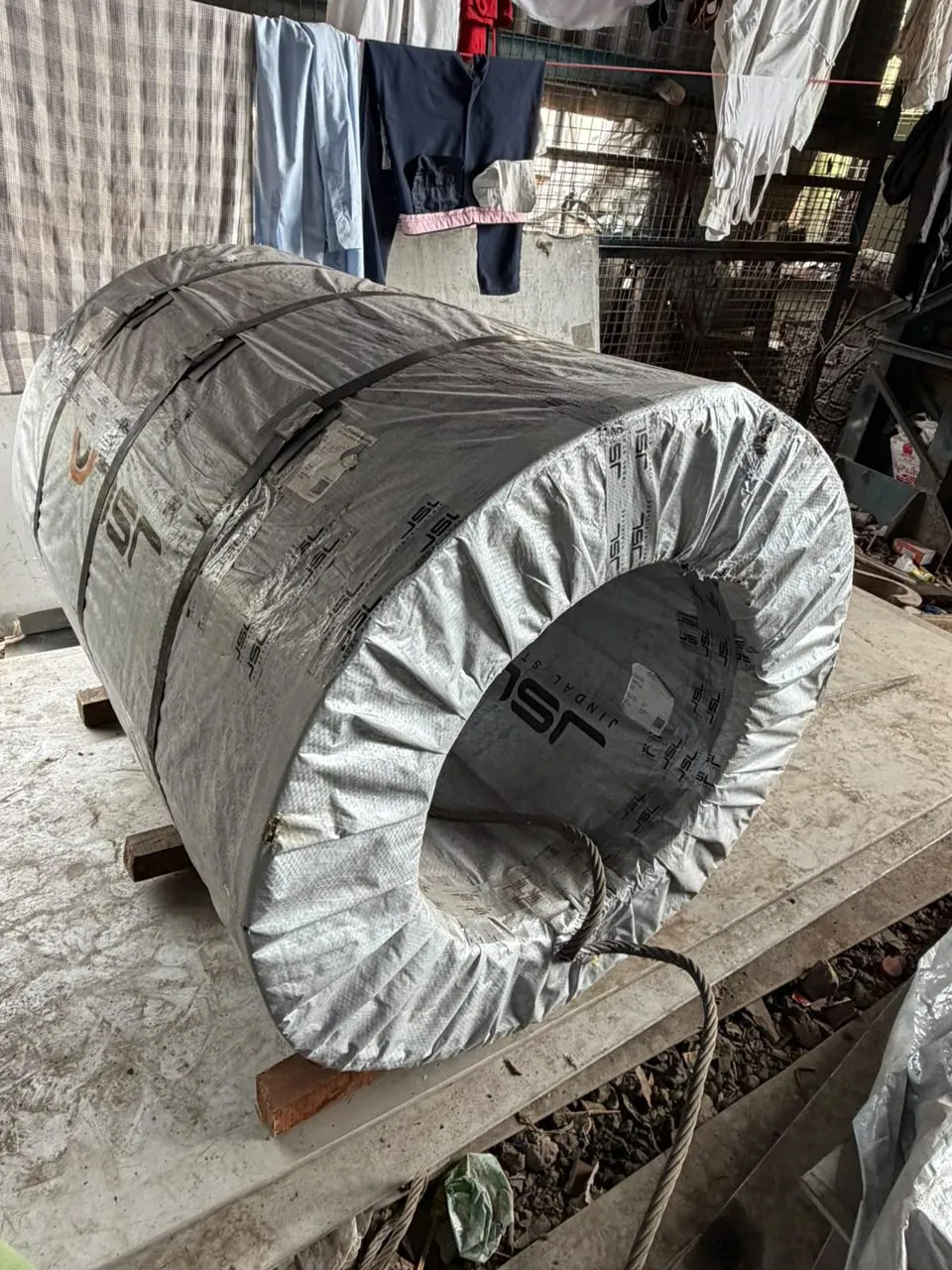
Mill-packed stainless coil in original Jindal (JSL) packaging
Genuine mill coil from Jindal (JSL), full EN 10204 traceability.
Questions

Frequently asked

How do I calculate steel plate weight?
Plate weight equals volume times density: multiply length by width by thickness to get volume, then multiply by the grade's density, roughly 7.9–8.0 kg per cubic decimeter for austenitic stainless and somewhat higher for nickel alloys. The steel plate weight calculator automates this for sheet, plate and coil once dimensions and grade are entered, and the how to calculate steel plate weight guide walks through the formula by hand with worked examples.
How do I read a mill test certificate?
A mill test certificate lists the heat number, the chemical composition from that heat's ladle analysis, the mechanical test results, including tensile, yield, elongation and, where applicable, impact values, the standard it certifies compliance with, and an inspection block identifying whether it is validated as an EN 10204 2.2, 3.1 or 3.2 certificate. The how to read a mill test certificate guide explains each field, and the heat number is the key that lets a buyer trace a specific plate or coil back to that exact certificate.
Which filler metal welds 304, 316 and 904L?
304 is typically welded with an ER308 or ER308L filler, matched closely to the base metal chemistry. 316 and 316L use ER316 or ER316L filler so the weld deposit carries the same molybdenum content as the base metal. 904L is different: because a matching filler cannot be relied on to resist pitting in the as-deposited weld, it is welded with an over-alloyed filler such as ER385 or a nickel-base consumable, as covered in the how to weld 904L guide.
How do I import steel from India (Incoterms and documents)?
Steel shipped from India typically moves under FOB, CIF or CFR Incoterms, which determine at what point the seller's responsibility for freight, insurance and risk transfers to the buyer. The shipment travels with a commercial invoice, packing list, bill of lading, certificate of origin and the mill test certificate for the material itself. The how to import steel guide sets out how these documents fit together and what to check on each one before the shipment clears customs at the destination port.
How do I choose plate thickness?
Plate thickness is set by the design pressure and temperature of the vessel or structure, a required corrosion allowance for the service life, and the mechanical property minimums of the specified grade at that thickness, since some specifications reduce strength requirements as section size increases. The how to choose plate thickness guide walks through this calculation for pressure-vessel-quality carbon steel plate, and the same logic, with grade-specific property values substituted, applies to stainless and nickel-alloy plate.
What is the difference between sheet, plate and coil?
Sheet is flat-rolled stainless or alloy steel below roughly 3 mm thick, plate is the same product above that threshold, and coil is either sheet- or plate-gauge material supplied wound on a reel rather than cut to flat length. The practical difference for a buyer is handling and minimum order quantity: coil suits continuous forming operations and larger volumes, while sheet and plate suit cut-to-size fabrication. The sheet vs plate vs coil guide sets out the exact thickness threshold and the forms each grade is stocked in.

Need this grade matched to your service?

Send your spec, our engineering team confirms the grade, stock and certification, ex-stock from Mumbai.

Request a quoteWhatsApp us