
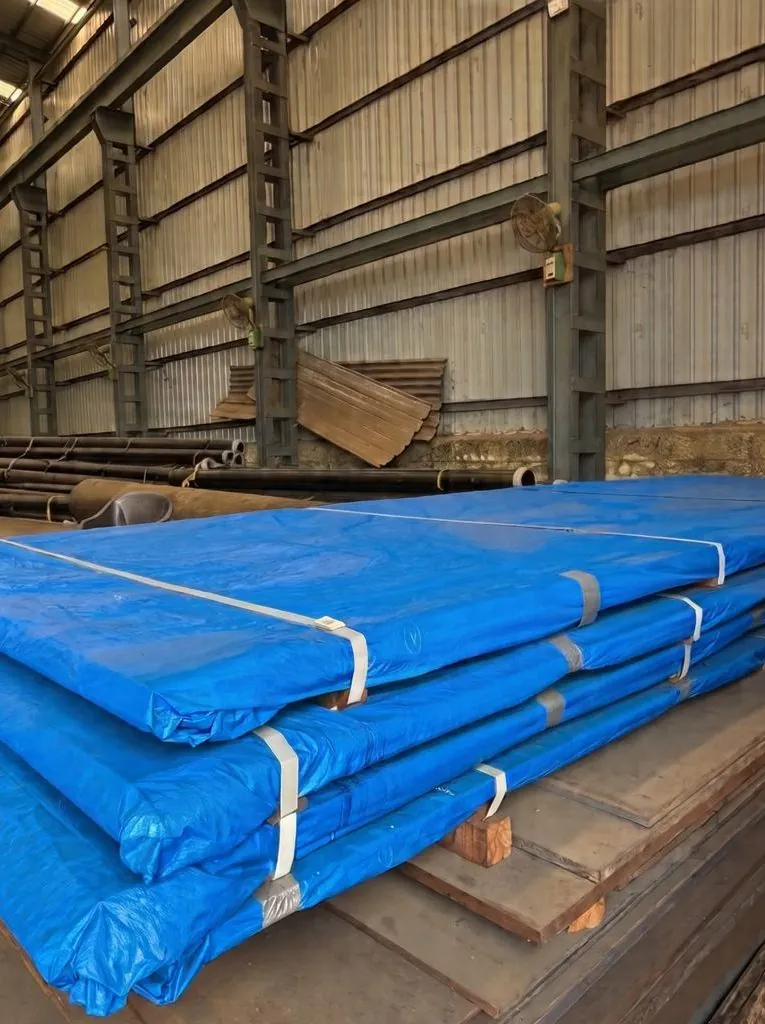
How to Choose a Stainless Grade for Fabrication
General fabrication covers a wide span of duty, from an indoor control-panel enclosure that never sees moisture to an outdoor process tank washed with chlorinated water. The grade decision turns on one question: what does the metal actually touch in service? Get the environment right first, and the rest of the specification, form, finish and welding, follows cleanly.
The two workhorse families are austenitic stainless grades. 304 stainless and its low-carbon sibling 304L handle dry, indoor and mild outdoor exposure. 316 stainless and 316L carry 2 to 3 percent molybdenum, which resists the chloride pitting that defeats 304 near coasts, in wash-down areas and around de-icing salt.
The most common and most expensive error is defaulting to 304 for chloride-adjacent or coastal duty, where it pits. Confirm the actual service chlorides before choosing 304 over 316. Stepping up a grade is far cheaper than cutting out a failed tank wall. Our guide on how to select a stainless grade and the interactive grade selector walk through the decision in detail.
Grade Comparison by Duty
| Grade | Family | PREN (approx.) | Key alloying | Typical fabrication duty |
|---|---|---|---|---|
| 304 / 304L | Austenitic SS | ~18 | 18Cr-8Ni | Dry indoor tanks, frames, enclosures, non-chloride service |
| 316 / 316L | Austenitic SS | ~24 | Adds 2 to 3% Mo | Coastal, wash-down, mild chloride, food and chemical contact |
| 904L | Super-austenitic SS | ~34 | ~25Ni, ~4.5Mo, ~1.5Cu | Hot or concentrated chlorides, sulfuric acid, severe duty |
PREN (pitting resistance equivalent number) is the orderable measure of chloride resistance: the higher the number, the harder it is to pit. See PREN and pitting resistance explained and the underlying mechanism in our note on pitting corrosion.
When to Step Up to 904L
Most fabrication never needs more than 316. When the tank holds hot concentrated chloride solution or dilute sulfuric acid, 904L earns its place. Its copper-bearing, roughly 4.5 percent molybdenum chemistry (PREN around 34) covers sulfuric-acid and high-chloride duty that would pit 316, often at lower cost than reaching for nickel alloys. Nandini Steel is a certified specialist in 904L plate, so if your fabrication crosses into acid service we can scope the grade against the real concentration and temperature. Compare the two directly in 904L vs 316L.
304 vs 316: the Decision Most Fabricators Face
Buyers often pay for 316 where dry, indoor, non-chloride 304 would serve, and occasionally under-spec 316 where hot concentrated chlorides really demand 904L or duplex. The molybdenum in 316 is what you are buying; match it to the real pitting risk rather than to habit. The side-by-side breakdowns in 304 vs 316 and 304L vs 316L lay out the cost and corrosion trade-off.
| Service condition | Recommended grade |
|---|---|
| Indoor dry frames, enclosures, decorative work | 304 / 304L |
| Outdoor non-coastal, occasional condensation | 304 / 304L |
| Coastal, marine air, wash-down, mild chloride | 316 / 316L |
| Food, dairy and beverage contact | 316 / 316L (304 for dry/non-acidic) |
| Hot concentrated chloride or sulfuric acid | 904L |
Why L Grades for Welded Tanks
Any welded tank or vessel passing through the 425 to 815 degree C band is at risk of sensitization, where chromium carbides form at grain boundaries and strip the local corrosion resistance, the root of intergranular corrosion. For welded fabrications held in that range, specify the low-carbon 304L or 316L (carbon at or below 0.03 percent) to avoid sensitization without a post-weld solution anneal. Our guide on how to prevent sensitization covers the mechanism and the fixes.
Form Selection: Sheet, Plate, Coil and Bar
Once the grade is set, choose the product form by section and load. A thin enclosure skin, a tank shell and a structural frame leg are three different forms of the same alloy. The sheet vs plate vs coil guide explains where the lines fall.
| Fabricated item | Typical form | Form links |
|---|---|---|
| Enclosures, cabinets, light skins, trays | Sheet (2B / BA finish) | 304 sheet, 316 sheet |
| Tank shells, bases, heavier walls, bracketry | Plate | 304 plate, 316 plate |
| High-volume pressed or rolled parts | Coil (slit to width) | 316 coil, 316L coil |
| Frames, supports, shafts, machined fittings | Round bar | Stainless round bars |
Flat product (sheet, plate and coil) conforms to ASTM A240 / ASME SA-240, with the general requirements, chemistry and tolerances in ASTM A480. Bar and shapes conform to ASTM A276. For assemblies that bring in piping and flanged connections, see our stainless pipes, pipe fittings and flanges.
Finish Matters for Enclosures and Tanks
Finish affects both appearance and cleanability. A 2B mill finish suits most tanks and backs of enclosures, a BA (bright annealed) finish gives a reflective surface, and a No. 4 brushed finish is common on visible panels. The stainless steel finishes 2B, BA, No. 4 guide covers selection. For hygienic tanks, see stainless steel for food and dairy; for visible building work, architectural stainless.
Welding and Fabrication Notes
Austenitic grades fabricate and weld well with standard shop practice. Match the filler to the base metal, keep heat input controlled, and clean and passivate the finished weld to restore corrosion resistance. See how to weld 304 and how to weld 316 for filler choice (ER308L and ER316L respectively), interpass control and post-weld cleanup. When a tank crosses into pressure duty, move to our guidance on pressure vessels and boilers.
Why Buy Fabrication Stainless from Nandini Steel
Nandini Steel has been an ISO 9001:2015-certified stockist and supplier of stainless, nickel-alloy and alloy-steel products since 2003, serving 260+ clients across 307+ projects in 36+ export countries. Every grade and form above is held ex-stock for immediate dispatch, and every order ships with an EN 10204 3.1 or 3.2 mill test certificate for full traceability. For live pricing, send an RFQ with grade, form, thickness and quantity.
| What you get | Detail |
|---|---|
| Stock | 304, 304L, 316, 316L and 904L in sheet, plate, coil and bar, ex-stock |
| Certification | EN 10204 3.1 / 3.2 mill test certificate with every order |
| Quality system | ISO 9001:2015, Cert No. 1283438 (Unitas UCS-UK), valid to 11 Jan 2028 |
| Pricing | RFQ for live pricing |
Frequently Asked Questions
Is 304 or 316 better for a fabricated tank?
Should I use 304 or 304L for a welded frame?
What product form should I order for an enclosure versus a tank?
Do I need 904L for general fabrication?
Does every order come with a material certificate?
Request a Quote
Tell us the grade, form, thickness and quantity and we will confirm ex-stock availability and live pricing. Call +91 22 43404600, WhatsApp +91 99202 09184 or email reachus@nandinisteel.com.