
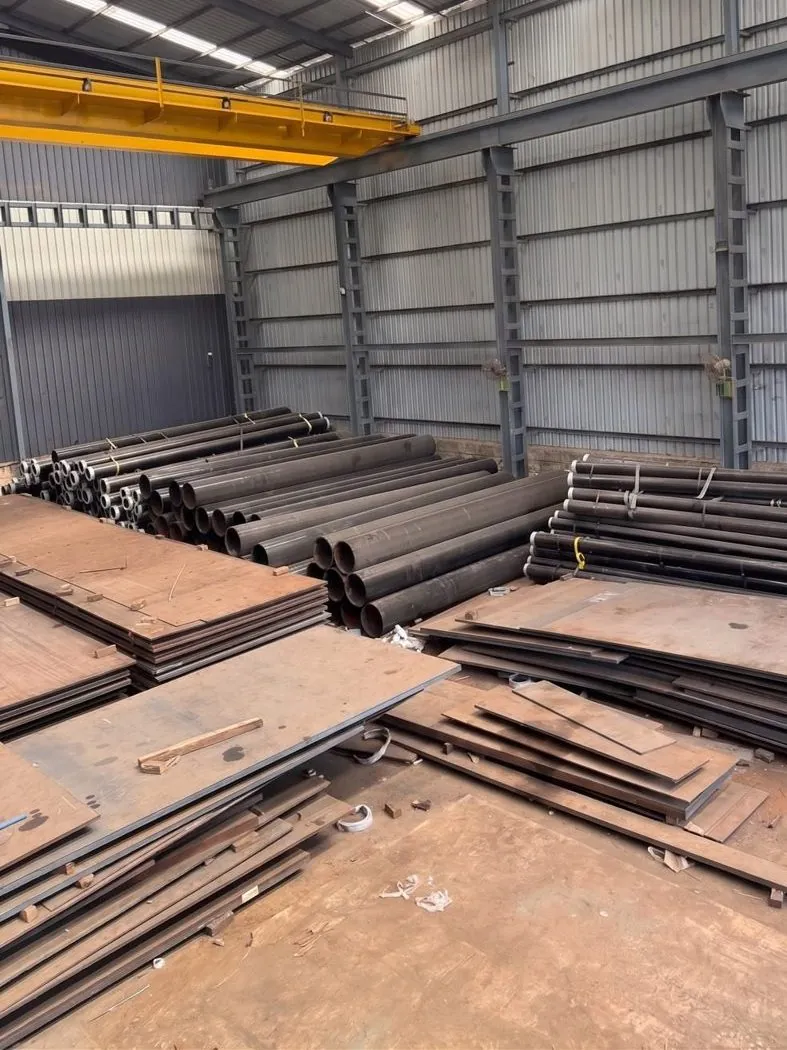
Architectural stainless steel is chosen by two linked decisions: grade and finish. Use 304/304L for dry inland and urban exposure, and step up to 316/316L once coastal chlorides, de-icing salt or pool atmospheres are in play. Then pick the finish, 2B, BA, No.4 or mirror, for appearance and cleanability. Every order ships with an EN 10204 3.1 mill test certificate.
Key Takeaways for Architectural Grade Selection
- Two decisions, not one. First set the grade by corrosion exposure, then set the surface finish by appearance and cleaning. Getting these in the wrong order is where coastal facades fail.
- 304/304L is the inland default. For dry, non-chloride urban and interior work it performs and looks the part at the lowest cost. See 304 vs 316 before you default to it near the coast.
- 316/316L is the coastal grade. Its 2–3% molybdenum lifts PREN to around 24 and gives the pitting corrosion resistance that 304 (PREN ~18) lacks in salt air.
- Finish drives both looks and durability. A smoother surface, BA or fine No.4, holds fewer deposits and stays cleaner, which matters as much as grade in a chloride-bearing atmosphere.
- Tea-staining is cosmetic, not structural. Light brown chloride staining on under-specified or rough-finished stainless is a surface problem, solved by moving up a grade, choosing a smoother finish, or washing down.
The Two-Step Decision: Grade First, Then Finish
Why Chlorides Set the Grade
The one variable that decides architectural grade is chloride load in the atmosphere. Chloride ions break down the passive chromium-oxide film that protects stainless steel, and once that film is breached locally you get pitting corrosion and, in shielded joints, crevice corrosion. Inland and urban air carries little chloride, so 304 copes. Coastal air, marine splash, roads treated with de-icing salt and indoor pool halls all push chloride high enough that 304 pits and stains, and the job moves to 316. The resistance of each grade is captured by its PREN, the single number this page ranks grades by.
Why Finish Matters for Corrosion, Not Just Looks
Finish is not purely cosmetic. A smoother surface gives chlorides and dirt fewer places to settle and makes rain and washing more effective, so a bright-annealed or fine brushed panel in a marine atmosphere will usually outlast a coarse one of the same grade. The finishes themselves are covered in depth in the guide to 2B, BA and No.4 stainless finishes, and the dimensional and surface rules behind them live in ASTM A480.
Architectural Grade Map by Exposure
Match the grade to the real atmospheric chloride load, not to the building's prestige. The table below maps common architectural exposures to the lowest grade that reliably survives them.
| Grade | PREN (approx.) | Suited architectural exposure | Governing limit | Grade page |
|---|---|---|---|---|
| 304 / 304L | ~18 | Dry interior, inland and general urban facades and fit-out | Pits and tea-stains in coastal or de-iced exposure | 304 stainless |
| 316 / 316L | ~24 | Coastal, marine-splash, de-iced and pool-hall atmospheres | Severe, stagnant or hot concentrated chloride duty | 316 stainless |
| 904L | ~34 | Aggressive marine-industrial microclimates and signature coastal landmarks | Specified where even 316 tea-stains; cost and availability | 904L super-austenitic |
Narrow a shortlist with the grade selector tool, or walk the full method in how to select a stainless grade.
The Architectural Grades in Detail
304 / 304L: The Inland and Interior Default
304 stainless, an austenitic chromium-nickel steel, is the workhorse for interior architecture and dry, inland or general urban exteriors. It forms, welds and polishes well, takes every architectural finish, and costs less than the molybdenum grades. The most common and costly spec error is defaulting to 304 for coastal or chloride-adjacent facades, where it pits and tea-stains. Confirm the actual atmospheric chlorides before choosing 304 over 316, because stepping up a grade is far cheaper than recladding a stained elevation. For welded architectural fabrications, specify 304L, with carbon held to 0.03% or below, so the weld heat-affected zone resists sensitization without post-weld annealing. Background sits in austenitic stainless steel, and the welding route is in how to weld 304. It ships as 304 sheet, 304 plate and 304 coil.
316 / 316L: The Coastal and Marine-Atmosphere Grade
Once salt air, marine splash, de-icing salt or an indoor pool atmosphere is in the brief, the grade is 316. Its 2–3% molybdenum lifts PREN to around 24 and delivers the chloride pitting resistance that 304 cannot, which is exactly what keeps a coastal facade clean and sound. The trade-off to watch runs both ways: buyers often pay for 316 where dry, indoor 304 would serve, or they under-specify 316 for severe, concentrated chloride microclimates where even it tea-stains. The molybdenum is what you are paying for, so match it to the real exposure. For welded coastal work, use 316L to keep the heat-affected zone corrosion-resistant, and see 304 vs 316 and 316 vs 316L for the trade-offs. The welding route is in how to weld 316. It ships as 316 sheet, 316 plate and 316 coil.
904L: For the Most Aggressive Coastal Microclimates
Where even 316 tea-stains, such as marine-industrial sites or signature landmarks that must stay flawless, 904L super-austenitic stainless is the architectural upgrade. Its roughly 4.5% molybdenum lifts PREN to around 34, well clear of 316, and its high nickel content raises resistance to chloride stress-corrosion cracking. This is a specialty tier, specified only when the microclimate genuinely demands it, and 904L is one of Nandini's third-party-certified specialty grades. For the metallurgy, see super-austenitic stainless steel and 904L vs 316L.
The Architectural PREN Ladder
Read the exposure first, chloride load, wet or sheltered, washed by rain or shielded, then pick the lowest grade that clears it. Climb the ladder and pitting resistance climbs with PREN.
| Grade | PREN (approx.) | Choose when | Note |
|---|---|---|---|
| 304 / 304L | ~18 | Interior, inland, general urban | No molybdenum; tea-stains in salt air |
| 316 / 316L | ~24 | Coastal, splash, de-iced, pool halls | 2–3% Mo; the architectural coastal default |
| 904L | ~34 | Marine-industrial and flawless-landmark duty | ~4.5% Mo; specialty upgrade above 316 |
The theory behind the ladder is in PREN and pitting resistance, with a quicker read in PREN explained.
Architectural Finishes: What to Specify
Finish is set after grade. The right architectural finish balances the look the design wants against how clean the surface stays in service. The common architectural finishes run from the standard mill 2B through the reflective BA and the brushed No.4 to mirror polish.
| Finish | Description | Typical architectural use | Cleanability |
|---|---|---|---|
| 2B | Standard smooth, cold-rolled mill finish, lightly reflective | Concealed cladding, substrates, back-of-house, further polishing base | Good |
| BA (bright annealed) | Bright, highly reflective mirror-like surface | Feature cladding, columns, reflective facades | Very good; smooth surface sheds deposits |
| No.4 | Uniform directional brushed/satin grain | Handrails, balustrades, elevator and lobby cladding, high-traffic surfaces | Good; hides fingerprints and minor scratches |
| Mirror (No.8) | Highly polished reflective finish | Signature feature panels and sculptural work | Very good, but shows marks readily |
For the full breakdown, including how finish interacts with corrosion in marine air, see stainless steel finishes: 2B, BA and No.4. Surface and tolerance rules are governed by ASTM A480.
Architectural Applications We Supply
- Cladding and rainscreen panels. Flat sheet and coil in 304/304L inland and 316/316L at the coast, in the finish the elevation calls for.
- Facades and feature elevations. Sheet and plate, often in BA or mirror for reflective work, with grade set by the local microclimate.
- Railings, balustrades and handrails. Round bar to ASTM A276 and tube, usually in a No.4 brushed finish for touch surfaces.
- Interior fit-out, lobbies and elevators. 304 No.4 is the economical default indoors, away from chlorides.
- Canopies, soffits and street furniture. Coastal and de-iced exposure moves these to 316/316L.
Related exterior work in true salt-spray and immersion zones follows the marine grade ladder, and general brackets, frames and enclosures sit under general fabrication.
Forms, Standards and Testing
Architectural stainless ships ex-stock in the form the job needs. Flat product, sheet, plate and coil, is governed by ASTM A240 / ASME SA-240 for chemistry and mechanicals, with finish and tolerance under ASTM A480. Bar for railings and fittings follows ASTM A276.
| Form | Grades held | Governing standard | MTC level |
|---|---|---|---|
| Sheet, plate, coil | 304 / 304L, 316 / 316L, 904L | ASTM A240 / ASME SA-240, finish per ASTM A480 | EN 10204 3.1 (3.2 on request) |
| Round bar, shapes | 304 / 304L, 316 / 316L | ASTM A276 | EN 10204 3.1 (3.2 on request) |
| Pipe, tube, fittings, flanges, fasteners | 304 / 304L, 316 / 316L | Per product standard | EN 10204 3.1 (3.2 on request) |
All plate comes from genuine mill stock: Aperam, Outokumpu, Jindal, POSCO, Nippon Steel and JFE. An EN 10204 3.1/3.2 mill test certificate is provided with every order, with full cast and heat traceability. See the mill test certificate reference, the quality assurance process, the firm's certifications, and the UNS / Werkstoff equivalents for designation cross-checks. For picking the right form, see sheet vs plate vs coil, and size an order with the steel weight calculator.
Keeping Architectural Stainless Clean
Even the right grade benefits from the right surface care. After fabrication, passivation restores the passive film and removes embedded iron that would otherwise rust-spot a facade. In service, periodic washing of salt deposits keeps coastal panels clean and prevents tea-staining from taking hold. The underlying chemistry is covered in passivation of stainless steel.
How to Select an Architectural Grade and Finish
- State the atmospheric exposure. Interior, inland urban, coastal, marine-splash, de-iced road or pool hall, these sit on different rungs.
- Set the grade by chloride load. Dry and inland allows 304; any real chloride exposure moves the job to 316, and the most aggressive microclimates to 904L.
- Choose L grades for welded work. Use 304L or 316L so the weld heat-affected zone stays corrosion-resistant.
- Pick the finish. Balance the look against cleanability, and favor a smoother finish in chloride-bearing air.
- Confirm form, standard and MTC level, then send the RFQ. Check the choice with the grade selector tool and PREN explained.
Equivalents: Common Architectural Grades
| Grade | UNS | Werkstoff (WNr) |
|---|---|---|
| 304 | S30400 | 1.4301 |
| 304L | S30403 | 1.4307 |
| 316 | S31600 | 1.4401 |
| 316L | S31603 | 1.4404 |
| 904L | N08904 | 1.4539 |
Full designation mapping is on the UNS / Werkstoff equivalents page.
FAQ
What grade of stainless steel is best for architecture?
Is 304 or 316 better for a coastal building?
What is tea-staining on stainless steel?
Which stainless steel finish is best for cladding?
Do I need 316L instead of 316 for welded architectural work?
Do your architectural grades come with a mill test certificate?
Request a Quote
Set the exposure, choose the grade and finish, and send the specification: 304/304L, 316/316L or 904L, with the form, standard and finish stated. Every grade sits ex-stock for immediate dispatch, and pricing runs by RFQ. Request a quote from Nandini Steel or reach out on WhatsApp at +91 99202 09184. You can also call +91 22 43404600 or email reachus@nandinisteel.com. For more on the firm, see about Nandini Steel. Nandini Steel has traded since 2003, delivering across 307+ projects and 260+ clients, with exports to 36+ countries.