
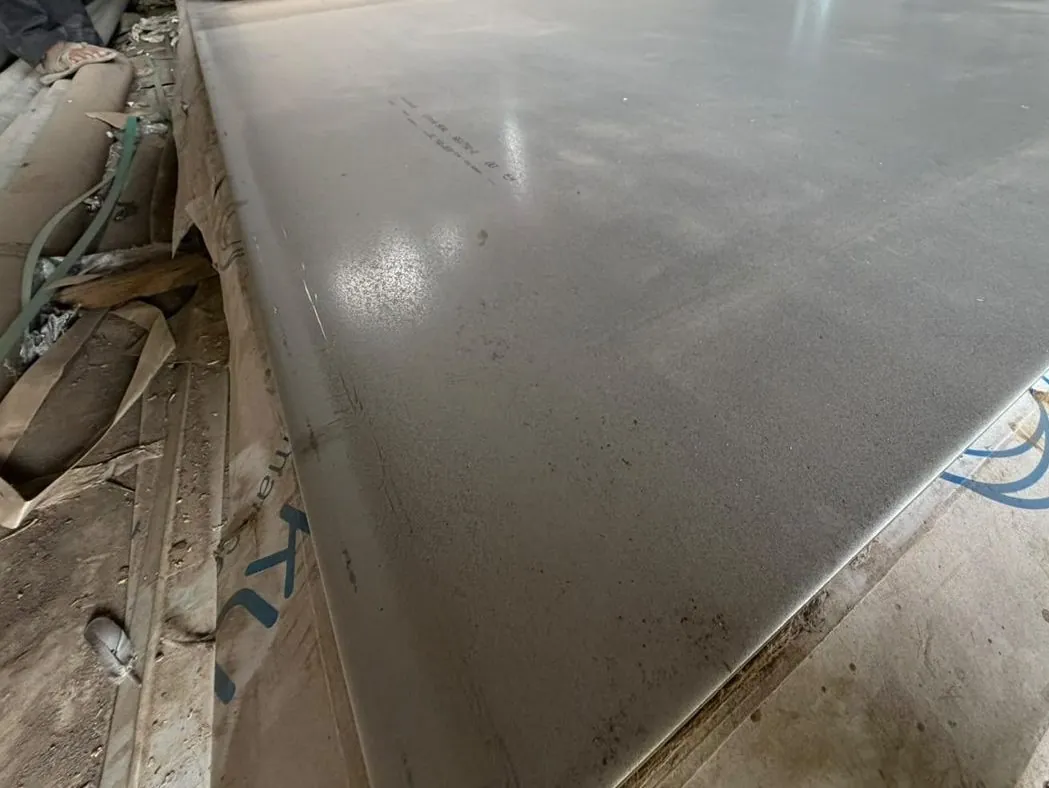
What Passivation Does: and What It Does Not Do
Passivation is a post-fabrication chemical surface treatment. It dissolves free iron (exogenous iron) that gets smeared onto a stainless surface during machining, forming, grinding, or welding, and lets the chromium-oxide (Cr₂O₃) passive film reform and enrich. In short, passivation raises the surface Cr:Fe ratio and restores the pitting and general corrosion resistance the grade was specified for. It is governed by ASTM A967, with cleaning and descaling practice described in ASTM A380 and the aerospace variant in AMS 2700.
What passivation is not:
- Not a coating. It adds nothing to the surface. It strips away contamination so the alloy's own oxide film can rebuild itself. The protection comes from the chromium already in the steel; see chromium forms the passive film.
- Not pickling. Passivation won't touch weld scale or heat tint. Taking off oxide scale and the chromium-depleted layer beneath it is pickling's job (an HF + HNO₃ descaling step), and that's a different chemistry done beforehand.
- Not a cure for metallurgy. Passivation can't reverse sensitization / intergranular corrosion; only solution annealing does that. Nor does it undo pitting corrosion once it's already started.
Passivation vs Pickling vs Electropolishing
| Process | What it removes | Acids used | Removes heat tint / scale? | Typical standard | When to use |
|---|---|---|---|---|---|
| Passivation | Free iron / exogenous surface contamination | Nitric or citric acid | No | ASTM A967 / AMS 2700 | Restore corrosion resistance after machining or forming on a clean, scale-free surface |
| Pickling | Oxide scale, heat tint, and the chromium-depleted layer plus some base metal | HF + HNO₃ (mixed acid) | Yes | ASTM A380 (descaling practice) | Remove weld scale / heat tint before passivation |
| Electropolishing | Micro-peaks and smeared metal (levels and brightens) | Electrolytic acid bath | Partial | ASTM B912 | Ultra-smooth, low-fouling hygienic finishes; also leaves a passive surface |
Do You Even Need to Passivate? By Grade and Condition
Passivation becomes an issue when free iron gets embedded in the surface or when the original passive film has been disturbed. The usual culprits: machining and grinding with contaminated media, contact with carbon-steel tooling or fixtures, forming, and welding. Austenitic grades like 304 stainless and 316 / 316L passivate without much trouble, and so does 904L super-austenitic material. Free-machining grades (303 / 416) are a different story. Their sulfur content and lower effective chromium leave them prone to flash attack in strong nitric baths, so they need extra care.
| Condition | Free-iron risk | Recommended action |
|---|---|---|
| Machined with dedicated stainless tooling | Low–moderate | Degrease and passivate per ASTM A967 |
| Ground with contaminated media / shared abrasives | High | Passivate; verify with free-iron test |
| Contact with carbon-steel tooling or fixtures | High | Passivate; iron transfer is the classic cause of rust specks |
| Welded | High (plus heat tint) | Pickle the HAZ / heat tint first, then passivate |
| As-received 2B, clean and unworked | Low | Usually already passive; passivate only if spec requires |
Prerequisites and Inputs: Before the Bath
Clean and Degrease First (ASTM A380)
Oil, grease, cutting fluid, and shop soil have to come off before any acid treatment, organic films shield the surface and leave passivation incomplete. Alkaline or solvent cleaning per ASTM A380 comes first; a thorough water rinse follows.
Remove Scale or Heat Tint First: Pickle, Don't Passivate Over It
If the surface carries weld scale or heat tint, pickle it off before you passivate. The chromium-depleted layer beneath heat tint is the corrosion weak point, and passivating over it doesn't restore it. Pickling (HF + HNO₃) or mechanical descaling has to come before the passivation bath.
Choose the Method and Standard
Select the bath, nitric or citric, and settle on the governing standard: ASTM A967 for general industrial work, AMS 2700 for aerospace. The choice depends on the grade, the surface condition, and whatever acceptance test the part has to pass. Write the method into the callout so the process can be reproduced and checked later.
Safety and Effluent
Nitric and hydrofluoric acids will corrode skin and metal alike, and the fumes they give off are dangerous to breathe. Anyone working with them needs proper PPE, good ventilation, and a plan for spill control. Spent baths and rinse water can't just go down the drain, either; they need neutralization and disposal that meets regulatory requirements. Citric-acid baths, by contrast, carry a much lighter safety and effluent burden. That's part of why more shops are specifying them these days.
The Passivation Process: Step by Step
- Degrease and clean, strip off oils, cutting fluid, and shop soil (an alkaline or solvent clean per ASTM A380) so the acid hits bare metal.
- Rinse, flush with clean water to carry off the cleaner and prevent carry-over into the bath.
- Descale / pickle if needed, pickle it if there's weld scale or heat tint. Use an HF + HNO₃ bath or mechanical descaling, since passivation alone won't touch it.
- Passivate, drop the part in the chosen nitric or citric bath, holding the concentration, temperature, and time ASTM A967 specifies for that grade.
- Neutralize / rinse, rinse well in clean water, neutralizing where the process calls for it, to halt the reaction and clear out leftover acid and dissolved iron.
- Dry, dry completely; standing moisture and trapped rinse water invite rouging and staining.
- Inspect and verify. Confirm the result with an accepted acceptance test: copper sulfate, high-humidity, water immersion, salt spray, or ferroxyl free-iron.
Nitric vs Citric Acid Passivation: Choosing the Bath
ASTM A967 covers several nitric treatments and several citric treatments, and the standard sets bands and acceptance criteria rather than handing you one fixed recipe. Nitric baths may include sodium dichromate as an inhibitor for low-chromium and free-machining grades, which helps suppress flash attack. Citric baths, by contrast, run milder and greener, with a smaller effluent burden. Always state the bath bands by the standard you're working to. Don't substitute shop-specific values that aren't part of your qualified procedure.
| Parameter | Nitric-acid passivation (ASTM A967 Nitric types) | Citric-acid passivation (ASTM A967 Citric types) |
|---|---|---|
| Active acid | Nitric acid (HNO₃), ~20–50% by volume depending on type | Citric acid, typically ~4–10% by weight |
| Temperature band | Ambient to ~50–60 °C per selected type | Ambient to ~70 °C per selected type |
| Immersion time band | ~20–30 min typical, per type and grade | ~10 min and up, per type and grade |
| Inhibitor addition | Sodium dichromate optional for low-Cr / free-machining grades | Not required; proprietary additives common |
| Best for | Standard austenitics; dichromate-inhibited nitric for 303/416 and low-Cr grades | Austenitics and free-machining grades; lower flash-attack risk, lower effluent |
| Safety / effluent | Corrosive acid, NOx fumes, chromate disposal if used | Milder handling, reduced effluent treatment |
Typical Bath Parameters
Check the bands above against the specific ASTM A967 type called out on your drawing or purchase order. Grade chemistry drives the choice: higher sulfur or lower chromium pushes you toward citric or dichromate-inhibited nitric, so the surface doesn't etch.
Pitfalls and Warnings
- Flash attack / etching. Strong nitric acid on high-carbon, high-sulfur, or free-machining grades can etch and darken the surface instead of passivating it, and so can the wrong strength or temperature. Switch to citric or dichromate-inhibited nitric for those grades.
- Passivating over heat tint. This won't work. Pickle the weld tint before you passivate; the chromium-depleted layer needs to come off, not get sealed in.
- Confusing passivation with sensitization repair. Passivation only treats the surface. It can't restore chromium at the grain boundaries. If the part sat at 425–815 °C, treat it as a metallurgy problem instead, see how to prevent sensitization.
- Contaminated rinse water / iron redeposition. Dirty rinse water can drop iron right back onto a surface you just passivated. Keep the water clean, especially on that final rinse.
- Incomplete drying → rouging. Moisture trapped in crevices and hygienic systems causes rouging and staining. Dry the part fully before you pack it or put it back into service.
How to Verify Passivation Worked
Passivation only works if the acceptance test proves it. Match the test to the grade: the copper-sulfate test is valid only for grades with 16% chromium or more, so don't run it on lower-chromium martensitic or free-machining grades. Record the result against testing, MTC & PMI.
| Test | What it detects | Applicable grades | Pass criterion | Reference |
|---|---|---|---|---|
| Copper sulfate | Free iron on the surface | Grades ≥16% Cr only | No copper (pink) deposit after the exposure period | ASTM A967 Practice |
| High-humidity | Free iron via induced rusting | Most stainless grades | No rust/stain after the humidity exposure | ASTM A967 Practice |
| Water immersion | Free iron via alternating wet/dry cycles | Most stainless grades | No staining over the cycle sequence | ASTM A967 Practice |
| Salt spray | General surface corrosion resistance | Most stainless grades | No significant corrosion for the specified duration | ASTM B117 |
| Ferroxyl / potassium ferricyanide | Free iron (sensitive spot check) | Most stainless grades | No blue indication of iron | ASTM A967 / A380 |
Passivation After Welding
Welding creates two separate problems, and the order of operations matters. First, the HAZ carries heat tint and a chromium-depleted layer, pickle that off first. Only then does passivation make sense, to remove free iron and restore the film on the cleaned weld zone. Do not treat passivation as a fix for weld decay, which is a sensitization problem solved by filler selection, low-carbon grades, or solution annealing. For procedure detail on the grades, see welding 316 stainless and how to weld 904L.
Passivation by Grade and Industry
- 304 / 316, general, marine, and food service. Standard nitric or citric passivation restores the as-specified resistance after fabrication; 316's molybdenum advantage is only realized on a clean, free-iron-free surface.
- 316 / 904L, hygienic and high-purity service. In pharmaceutical / hygienic service and high-purity water systems, passivation plus full drying is central to rouging control; citric chemistry and electropolished surfaces are common here.
- 904L / Incoloy 825, acid service. In fertilizer / acid service and pulp & paper, passivation preserves the resistance of copper-bearing and nickel-rich chemistries after fabrication, it supports, but never substitutes for, the right grade selection.
How Nandini Supplies Passivation-Ready Material
Nandini Steel holds ISO 9001:2015 certification and works as a stockist, supplier, and supplier of stainless, nickel-alloy, and PVQ products in sheet, plate, coil, and fabricated forms. Everything sits ex-stock, ready to ship right away. The material comes from genuine mills, names like Aperam, Outokumpu, Jindal, POSCO, Nippon Steel, and JFE. Surface condition gets stated on the paperwork too, so whoever receives the goods can plan the passivation step without guesswork.
EN 10204 3.1/3.2 mill test certificates come with every order. They document the heat chemistry, which is what determines the right passivation route for the grade, nitric, dichromate-inhibited nitric, or citric. For guidance on reading that paperwork, see read a mill test certificate.
Quality runs under ISO 9001:2015, Certificate No. 1283438, issued by Unitas Certification Services, UCS-UK, valid to 11-Jan-2028. Third-party inspection is available too, through TÜV SÜD, Bureau Veritas, DNV, and SGS. Nandini has been at this for more than 20 years now, since 2003, and has delivered 307+ projects for 260+ clients across 36+ export countries.
One lesson keeps coming up in the field: a lot of reported "passivation failures" on welded stainless aren't passivation failures at all. They're un-pickled weld heat tint. The chromium-depleted layer got sealed over instead of removed, so the part rusted right at the weld. Pickle first. Passivate second. Then verify.
For live pricing and a passivate-to-spec request, send an RFQ that spells out the grade, form, and surface condition, along with the ASTM A967 method and acceptance test you need.