
Pulp & Paper Is a Corrosion Map: Key Takeaways
A mill can swing from caustic to hot acidic chloride within a few hundred meters, so no single grade fits the whole plant. Specify by zone, not by habit.
- Bleach plant (ClO₂ / D-stage): hot, acidic, chloride-rich, step up to super-austenitic 904L or Incoloy 825; 316L pits and cracks here.
- Chemical recovery (boilers, evaporators, tanks): a pressure-and-heat problem, answered by A516 Gr 70 pressure-vessel-quality carbon plate, not a corrosion alloy.
- Digester & white-liquor (Kraft): caustic NaOH/Na₂S, 304L/316L, often clad, with low-carbon grades to dodge weld sensitization.
- Paper machine & stock prep: neutral-to-mild chloride and abrasion, 316L or duplex 2205 at the suction roll, headbox and stock chests.
- Selection driver: chloride concentration, temperature and acidity set the pitting risk, rank candidates by PREN before you pay for an upgrade.
The Pulp & Paper Grade-by-Zone Map
This is the call the page needs to make: for this specific zone of your mill, which grade and form should you specify, and why does it hold up metallurgically? Each grade cell links to the stock page carrying that form.
| Process zone | Environment | Recommended grade(s) | Form | Why it fits |
|---|---|---|---|---|
| Bleach plant, D-stage washers, tanks, ducting | Hot acidic chloride + chlorine dioxide (ClO₂) | 904L coil (step to 254 SMO / titanium Gr 2 at extreme ClO₂) | Sheet, plate, coil | ~4.5% Mo + Cu + ~25% Ni resist chloride pitting/crevice where 316L fails |
| ClO₂ generator & acidic chemical handling | Mixed oxidizing + reducing acids, chloride | Incoloy 825 coil | Sheet, plate (coil limited) | High-Ni Ni-Fe-Cr alloy resists reducing and oxidizing acids plus chloride SCC |
| Recovery boiler, drums & pressure parts | High-pressure steam and heat | A516 Gr 70 boiler-quality plate | Plate | Code pressure-vessel-quality plate; notch-tough when normalized |
| Black-liquor evaporator & storage tanks | Caustic/organic liquor, moderate heat | A516 Gr 70 body + stainless clad on the liquor side | Plate | PVQ carbon shell carries the pressure; CRA cladding takes the liquor |
| Digester & white-liquor service (Kraft) | Caustic NaOH / Na₂S | 316L / 304L, often clad | Plate, sheet | Austenitic stainless resists caustic; low-carbon grade avoids weld sensitization |
| Paper machine, suction roll, headbox, stock chest | Neutral-to-mild chloride, abrasive wet end | 316L or duplex 2205 | Sheet, plate | Mo-bearing austenitic / duplex handle wet-end chlorides and carry mechanical load |
Bleach Plant & ClO₂ Service: the Aggressive Zone
The bleach plant is where materials selection stops being routine. Chlorine dioxide stages combine low pH, high temperature and high chloride activity, and that mix is exactly what drives localized attack on standard stainless.
Why 316L Is Not Enough
316L is a fine wet-end grade, but its pitting resistance equivalent sits at only ~24. In hot acidic chloride it is susceptible to chloride pitting, crevice corrosion under deposits and gaskets, and chloride stress-corrosion cracking. A common, expensive buyer error is under-specifying 316 for hot concentrated chlorides where a super-austenitic grade is really needed, the molybdenum you are paying for must match the real pitting risk.
904L for Washers, Tanks & Ducting
Super-austenitic 904L (UNS N08904, WNr 1.4539) carries ~25% Ni, ~4.5% Mo and ~1.5% Cu for a PREN of about 34. That chemistry resists chloride pitting and crevice attack, resists sulfuric acid through its copper addition, and outperforms 316L in chloride SCC because the raised nickel lifts the cracking threshold. It is the default upgrade for D-stage washers, bleach towers, tanks and ClO₂ ducting. The classic spec error runs the other way too: reaching for Alloy 20, 625 or titanium when 904L's chemistry already covers the duty at lower cost, check the acid concentration and temperature against the 904L iso-corrosion limits first. See 904L vs 316L for the side-by-side, and 904L plate or the 904L hub for forms.
Incoloy 825 for ClO₂ Generators & Acidic Handling
Where the service turns to mixed oxidizing and reducing acids, ClO₂ generation, acid make-up and recovery, the nickel-alloy answer is Incoloy 825 (UNS N08825, WNr 2.4858), a Ni-Fe-Cr alloy with 38–46% Ni, 2.5–3.5% Mo, 1.5–3% Cu and titanium stabilization. It holds up against reducing acids and oxidizing ones alike, and that combination is exactly why engineers pick it over 316L and even 904L for mixed-acid duty. Buyers often call it "Inconel 825," but that's not quite right; the correct name is Incoloy, or Alloy 825. Getting the designation straight on the PO and MTC heads off disputes at receiving inspection. See how it stacks up in Incoloy 825 vs Inconel 625, or go straight to specifying from Incoloy 825 plate and sheet.
When to Step Up to 254 SMO or Titanium
At the most aggressive ClO₂ positions, where high temperature combines with very high chloride, the candidate ladder moves past 904L to 6-Mo super-austenitics (254 SMO, PREN ~43) and titanium Grade 2, which is effectively immune in oxidizing chloride. Don't under-spec 904L where a 6-Mo grade is genuinely required. Run the duty through the grade selector or PREN explained before committing.
Chemical Recovery: Recovery Boilers, Evaporators & Tanks
Chemical recovery isn't mainly a corrosion problem. It's a pressure-and-heat problem, and the answer is pressure-vessel-quality plate.
A516 Gr 70 for Boiler Drums & Evaporator Bodies
A516 Gr 70 is PVQ carbon-steel plate conforming to ASTM A516 / ASME SA-516 (with ASTM A20 general requirements). It is used in pressure vessels, boilers, storage tanks and separators, and it is the standard material for recovery-boiler drums and black-liquor evaporator bodies. For low-temperature vessels, specify normalized plate with Charpy impact at the design temperature, not as-rolled, the mechanical minimums and the normalizing requirement vary with section thickness, so state the plate thickness up front. See how to specify A516 for pressure vessels.
Stainless-Clad Options for Black-Liquor Service
Where the liquor side needs corrosion protection but the shell still has to meet code pressure capacity, the cheaper build is an A516 Gr 70 backing plate clad with corrosion-resistant stainless. The PVQ carbon plate handles the pressure; the thin CRA layer handles the chemistry. We use this same combination across our pressure vessels & boilers work.
Digesters & White-Liquor Service (Kraft)
The Kraft digester and the white-liquor loop run on caustic chemistry: NaOH and Na₂S at temperature. Austenitic stainless (304L/316L), often used as cladding over carbon-steel vessels, handles the caustic duty. Specify low-carbon L grades for welded fabrication. Hold an austenitic steel in the 425–815 °C range and it sensitizes; the low-carbon chemistry (C ≤ 0.03%) prevents the chromium-carbide precipitation that causes weld-zone attack, and you don't need post-weld solution annealing to avoid it. Caustic stress-corrosion cracking is the failure mode to design against in the hottest white-liquor positions.
Paper Machine & Stock Prep
The wet end doesn't ask much of the metal, neutral to mildly acidic process water, moderate chlorides, some abrasion. 316L handles most of it: headbox, stock chest, piping. Its 2–3% molybdenum buys pitting resistance that 304 simply doesn't have. The suction roll is different. Cyclic load, chlorides, and crevices under the shell combine to favor something stronger, with a higher PREN, duplex 2205 (PREN ~35) fits. Still, match the grade to the chloride level you actually have. Don't default high just because it feels safer.
Why These Grades Fit: the Metallurgy
Every zone recommendation above comes down to one thing: how the alloy in question stands up to a particular corrosion mechanism.
PREN & Chloride Pitting
The pitting resistance equivalent, or PREN, ranks an alloy's resistance to pitting from its chromium, molybdenum and nitrogen content. Bleach-plant selection follows a strict ladder: 304 sits around 18, 316 around 24, and 904L climbs to roughly 34. Incoloy 825 lands between 31 and 40, while duplex 2205 comes in near 35. Chloride pitting is exactly why the harsher ClO₂ stages push plants to abandon 316 for something stronger.
Crevice Corrosion Under Deposits & Gaskets
Pitting's more insidious cousin, crevice corrosion, initiates under fiber deposits, gaskets and washer-drum overlaps where the local chemistry acidifies and chloride concentrates. Crevice attack starts at a lower temperature and chloride level than open-surface pitting, which is why bleach-plant hardware is specified a rung above what a bulk-chemistry calculation alone would suggest.
Chloride SCC & Why Nickel Content Matters
Austenitic stainless is susceptible to chloride stress-corrosion cracking in hot chloride under tensile stress, a failure mode 316L shares. Raising nickel content lifts the cracking threshold, which is why 904L (~25% Ni) outperforms 316L and why high-nickel Incoloy 825 is effectively removed from the austenitic SCC curve.
Acid Resistance: Sulfuric & Mixed
The bleach plant is acidic as well as chloride-bearing. 904L's copper addition gives it genuine sulfuric-acid resistance, while Incoloy 825's high nickel and molybdenum let it resist both reducing and oxidizing acids, the combination that makes it the ClO₂-generator choice.
Focus-Grade Summary for Pulp & Paper
| Grade | Family | UNS / WNr | PREN | Signature resistance | Typical zone | Standard | Forms |
|---|---|---|---|---|---|---|---|
| 316L | Austenitic SS | S31603 / 1.4404 | ~24 | General pitting (not hot acidic chloride) | Paper machine, wet end | ASTM A240 | Sheet, plate, coil |
| 904L | Super-austenitic SS | N08904 / 1.4539 | ~34 | Chloride pitting/crevice + sulfuric acid | Bleach plant (ClO₂ stages) | ASTM A240 / ASME SA-240 | Sheet, plate, coil |
| Incoloy 825 | Ni-Fe-Cr alloy | N08825 / 2.4858 | ~31–40 | Reducing + oxidizing acids, chloride | ClO₂ generator, acid handling | ASTM B424 | Sheet, plate (coil limited) |
| A516 Gr 70 | PVQ carbon steel | K02700 /, | n/a | Pressure & heat (not corrosion) | Recovery boiler, evaporator, tanks | ASTM A516 / ASME SA-516 | Plate |
PREN / Bleach-Plant Selection Ladder
| Candidate | PREN (approx.) | Choose when… |
|---|---|---|
| 316 / 316L | ~24 | Wet end only, neutral-to-mild chloride, no hot ClO₂ |
| Duplex 2205 | ~35 | Mild chloride plus mechanical load (suction rolls) |
| 904L | ~34 | Hot acidic chloride and ClO₂ stages, the bleach-plant default |
| Incoloy 825 | ~31–40 | Mixed oxidizing/reducing acids and chloride (ClO₂ generation) |
| 254 SMO / titanium Gr 2 | ~43 / immune | Chloride and temperature exceed the 904L iso-corrosion limit |
Standards & Certification for Pulp-&-Paper Supply
Material specified for a mill is only as good as its paperwork. Across these grades we supply to ASTM A240 / ASME SA-240 for flat stainless, ASTM B424 / ASME SB-424 for Incoloy 825, and ASTM A516 / ASME SA-516 (with ASTM A20) for PVQ plate. Every order ships with an EN 10204 3.1/3.2 mill test certificate, which gives full heat/cast traceability back to the melt. Positive material identification (PMI) confirms grade on receipt. Intergranular-corrosion testing per ASTM A262, meanwhile, verifies that welded bleach-plant equipment hasn't sensitized. For a breakdown of what each MTC level actually certifies, see the EN 10204 3.1 mill test certificate reference.
Forms, Stock & Sourcing
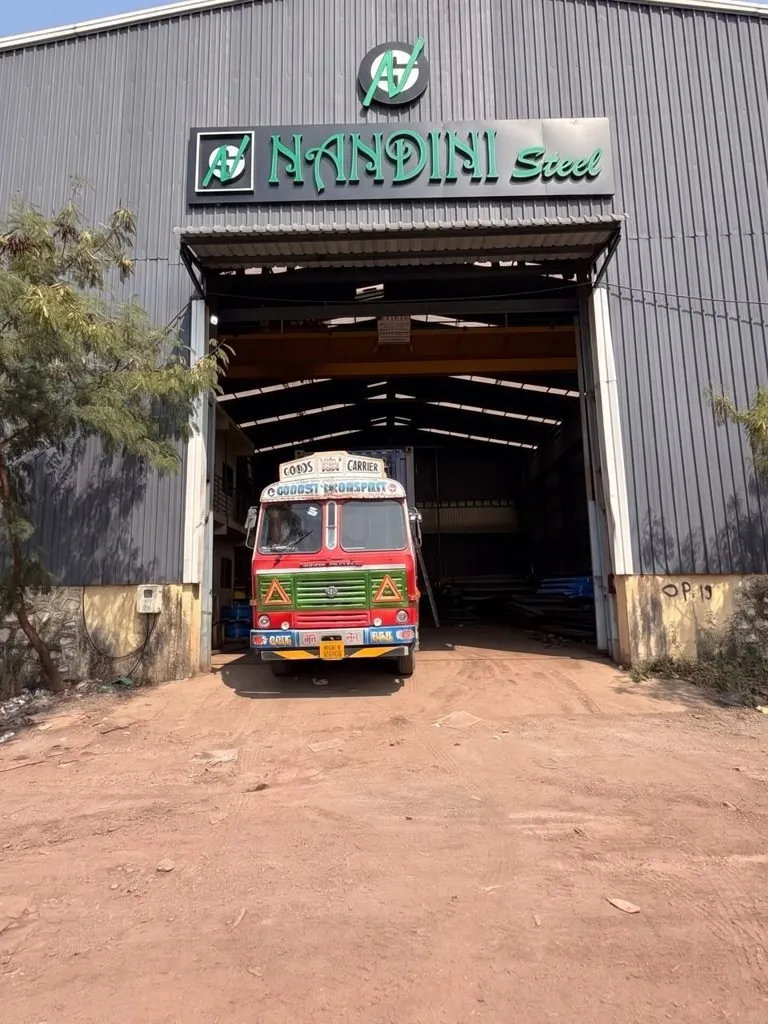
Nandini Steel is an ISO 9001:2015-certified stockist and supplier. Its specialty, verified by third-party certification, spans 904L, Alloy 28, Incoloy 800 and Hastelloy: precisely the super-austenitic and nickel-alloy families a bleach plant needs. Every product sits ex-stock, ready for immediate dispatch. That covers 904L in sheet, plate and coil; Incoloy 825 in sheet and plate; A516 Gr 70 in plate; and 316L, part of the 316 family, across sheet, plate and coil. The material itself is genuine mill plate from Aperam, Outokumpu, Jindal, POSCO, Nippon Steel and JFE. Each heat carries full traceability on its MTC.
Pricing isn't pulled from a fixed list; it's quoted live against your zone, grade, form and tonnage, so send an RFQ. To size a plate order, use the weight calculator. Need to confirm a grade against duty? Check the grade selector or read how to select a stainless grade. And for adjacent acid duty, our chemical / acid processing and acid-service applications hubs cover that ground.
FAQ
What stainless steel is used in the bleach plant of a paper mill?
Is 316L good enough for chlorine dioxide (ClO₂) service?
Why is 904L chosen over 316L for pulp and paper bleaching?
What steel is used for recovery boilers?
When should I use Incoloy 825 instead of 904L in a pulp mill?
Do you supply mill test certificates for pulp & paper grades?
Request a Quote
Nandini Steel's engineering team will quote live pricing and confirmed ex-stock availability against an EN 10204 3.1/3.2 mill test certificate. Just give them the mill zone, grade, form, thickness and tonnage.
- Phone: +91 22 43404600 · +91 9920209184
- WhatsApp: +91 99202 09184
- Email: reachus@nandinisteel.com
- Address: 25, Dreamland Building, 601, 6th Floor, Mama Parmanand Marg, Charni Road, Opera House, Girgaon, Mumbai, Maharashtra 400004, India
- GSTIN: 27ADJPA7240C1Z0
With 20-plus years in business since 2003, the company has completed 307-plus projects for 260-plus clients and exports to more than 36 countries.