
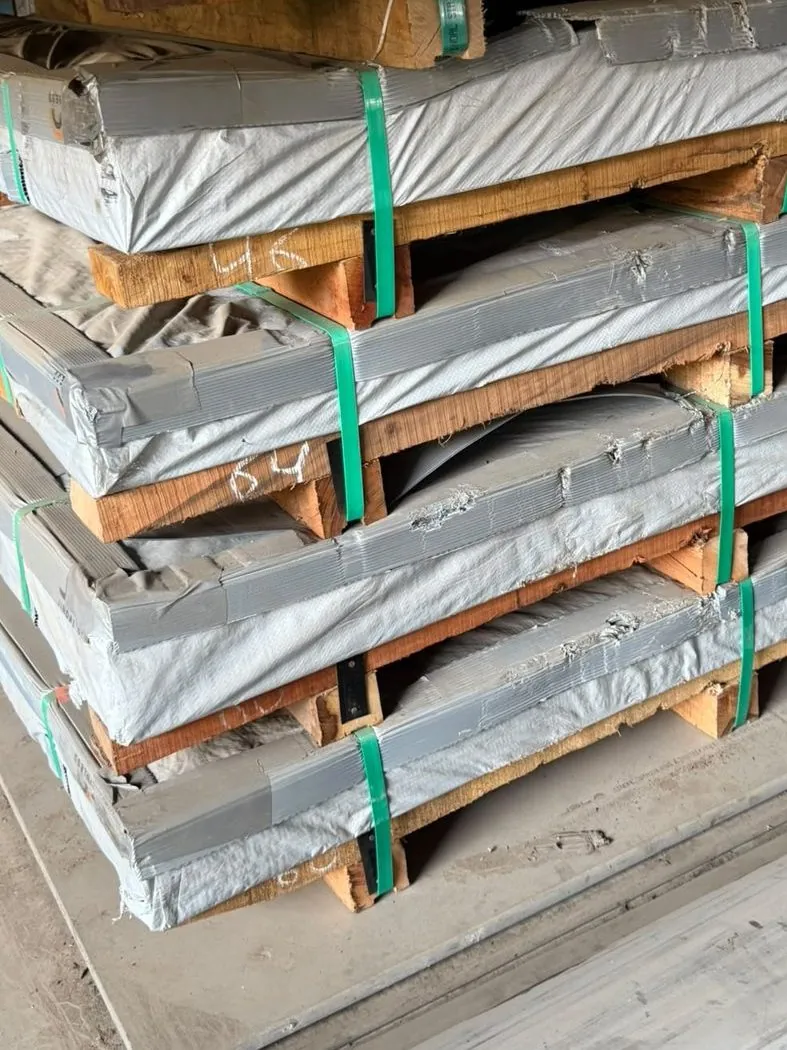
Nandini Steel stocks both grades for immediate dispatch, and every order ships with an EN 10204 3.1 or 3.2 mill test certificate.
What SA387 Grade 11 and 22 Plate Is
ASME SA-387 (the ASME edition of ASTM A387) covers chrome-moly alloy steel plate intended for welded boilers and pressure vessels operating at elevated temperatures. The chromium and molybdenum content is what separates these grades from plain carbon pressure-vessel plate such as A516: the alloy additions raise creep-rupture strength, resist graphitization, and stand up to high-temperature hydrogen attack and sulfidation. That is why Grade 11 and Grade 22 are the default choice for hydroprocessing reactors, boiler drums, and hot piping headers rather than carbon steel.
Both grades belong to the chrome-moly alloy steel family. Grade 11 carries roughly half the chromium of Grade 22, so Grade 22 is specified when service temperature, hydrogen partial pressure, or creep demand climbs beyond what Grade 11 can carry. Each grade is supplied in Class 1 or Class 2, which set different minimum tensile and yield values.
SA387 Grade 11 vs Grade 22: Nominal Chemistry
The grade designations are shorthand for the nominal chrome-moly chemistry defined in the standard. Grade 11 is the 1.25Cr-0.5Mo plate and Grade 22 is the 2.25Cr-1Mo plate.
| Element | SA387 Grade 11 (1¼Cr-½Mo) | SA387 Grade 22 (2¼Cr-1Mo) |
|---|---|---|
| Carbon (C) | 0.05–0.17% | 0.05–0.15% |
| Manganese (Mn) | 0.40–0.65% | 0.30–0.60% |
| Silicon (Si) | 0.50–0.80% | 0.50% max |
| Chromium (Cr) | 1.00–1.50% | 2.00–2.50% |
| Molybdenum (Mo) | 0.45–0.65% | 0.90–1.10% |
The extra chromium in Grade 22 improves oxidation and sulfidation resistance, and the higher molybdenum lifts creep-rupture strength at sustained temperature. For lower-temperature or thinner-section vessels, Grade 11 often delivers the service life required at lower cost.
Mechanical Properties by Class
SA387 plate is ordered to a class as well as a grade. Class 1 is supplied in the annealed or normalized-and-tempered condition with lower strength minimums, while Class 2 carries higher tensile and yield values for the same chemistry.
| Property | Grade 11 / 22, Class 1 | Grade 11 / 22, Class 2 |
|---|---|---|
| Tensile strength | 60–85 ksi (415–585 MPa) | 75–100 ksi (515–690 MPa) |
| Yield strength (0.2%), min | 35 ksi/240 MPa (Gr 11), 30 ksi/205 MPa (Gr 22) | 45 ksi (310 MPa) |
| Elongation, min | 22% (Gr 11), 18% (Gr 22) | 22% (Gr 11), 18% (Gr 22) |
| Typical heat treatment | Annealed | Normalized and tempered |
State the plate thickness on your enquiry, because the mechanical minimums and the heat-treatment route depend on section. For vessels needing low-temperature toughness, call out Charpy impact testing at the design temperature on the order so the plate is supplied and certified in the right condition.
Standards and Equivalent Product Forms
SA387 plate rarely stands alone. A complete chrome-moly assembly pairs the plate with matching pipe, forgings, fittings, and bolting so the whole joint behaves consistently at temperature. The table shows the common companions to Grade 11 and Grade 22 plate.
| Product form | Governing standard | Grade 11 designation | Grade 22 designation |
|---|---|---|---|
| Plate (vessel) | ASME SA-387 / ASTM A387 | Grade 11 | Grade 22 |
| Seamless pipe | ASTM A335 | P11 | P22 |
| Forgings and flanges | ASTM A182 | F11 | F22 |
| Buttweld fittings | ASTM A234 | WP11 | WP22 |
The umbrella requirements for pressure-vessel plate, including tolerances and testing, sit in ASTM A20. For the plate specification itself, see our ASTM A387 chrome-moly plate standard page, and for the chrome-moly piping that runs alongside it, ASTM A335 seamless alloy pipe. Matching forgings follow ASTM A182, fittings follow ASTM A234, and high-temperature bolting follows ASTM A193 / A194.
Where Grade 11 and 22 Plate Is Used
Chrome-moly plate earns its place anywhere metal is held hot under pressure with hydrogen or sulfur in the stream. Grade 11 and Grade 22 are workhorses in refining and petrochemical plants, power boilers, and heavy chemical equipment.
- Hydroprocessing and hydrocracker reactors, where high-temperature hydrogen attack rules out carbon steel.
- Boiler drums, steam headers, and superheater components in power generation.
- Catalytic reformer and coker vessels in petrochemical service.
- Separators, exchangers, and hot piping in oil and gas processing.
- General pressure vessels and boilers that run above the comfortable range of carbon plate.
When the duty is warm rather than hot and no hydrogen or creep concern exists, carbon pressure-vessel plate such as A516 Grade 70 is usually the more economical answer. Our carbon vs stainless vs alloy steel explainer walks through where each family belongs, and the pressure-vessel steel guide covers plate selection in more depth.
Welding, Heat Treatment, and Fabrication Notes
Chrome-moly plate hardens in the heat-affected zone, so fabrication is more demanding than carbon steel. Grade 11 and Grade 22 welds normally require preheat, controlled interpass temperature, and post-weld heat treatment to temper the weld zone and relieve residual stress. Filler metal is matched to the grade, and thicker Grade 22 sections in particular need careful control of cooling to avoid cracking. Specify the required heat-treatment condition up front so the plate arrives suited to your welding procedure, and confirm whether sour or wet H2S exposure applies, in which case NACE MR0175 / ISO 15156 hardness limits come into play. Normalizing and tempering practice is explained further in our normalizing PVQ plate note.
Quality, Testing, and Traceability
Every plate we supply ships with an EN 10204 3.1 or 3.2 mill test certificate, so the chemistry and mechanical results are traceable to the heat. Nandini Steel is an ISO 9001:2015-certified supplier, certificate number 1283438 issued by Unitas Certification Services (UCS-UK), valid to 11 January 2028. Third-party inspection by agencies such as TUV SUD, Bureau Veritas, DNV, SGS, and ABS can be arranged against your order. For background on documentation and inspection, see how to read a mill test certificate, the EN 10204 MTC standard, and our notes on material traceability and MTC, NDT and PMI testing.
Sizes, Stock, and Ordering
All SA387 Grade 11 and Grade 22 plate is held ex-stock for immediate dispatch, cut and supplied to your vessel drawing. To estimate plate weight before you order, use our steel plate weight calculator or the how to calculate steel plate weight guide, and how to choose plate thickness if the section is still open. We also stock the matching alloy steel pipes, alloy steel flanges, alloy steel forged fittings, and alloy steel fasteners to complete the assembly. Browse the wider alloy steel grade range or the SA387 overview for related grades.
Frequently Asked Questions
What is the difference between SA387 Grade 11 and Grade 22?
Is SA387 the same as ASTM A387?
What does Class 1 and Class 2 mean on SA387 plate?
Does SA387 plate need post-weld heat treatment?
Can I get a mill test certificate with the plate?
When should I use A516 carbon plate instead of SA387?
Request a Quote
For live pricing and stock availability on SA387 Grade 11 and Grade 22 plate, send your grade, class, thickness, and plate sizes to reachus@nandinisteel.com, call +91 22 43404600, or WhatsApp +91 99202 09184. Nandini Steel, Mumbai, dispatches ex-stock with full mill certification on every order.