
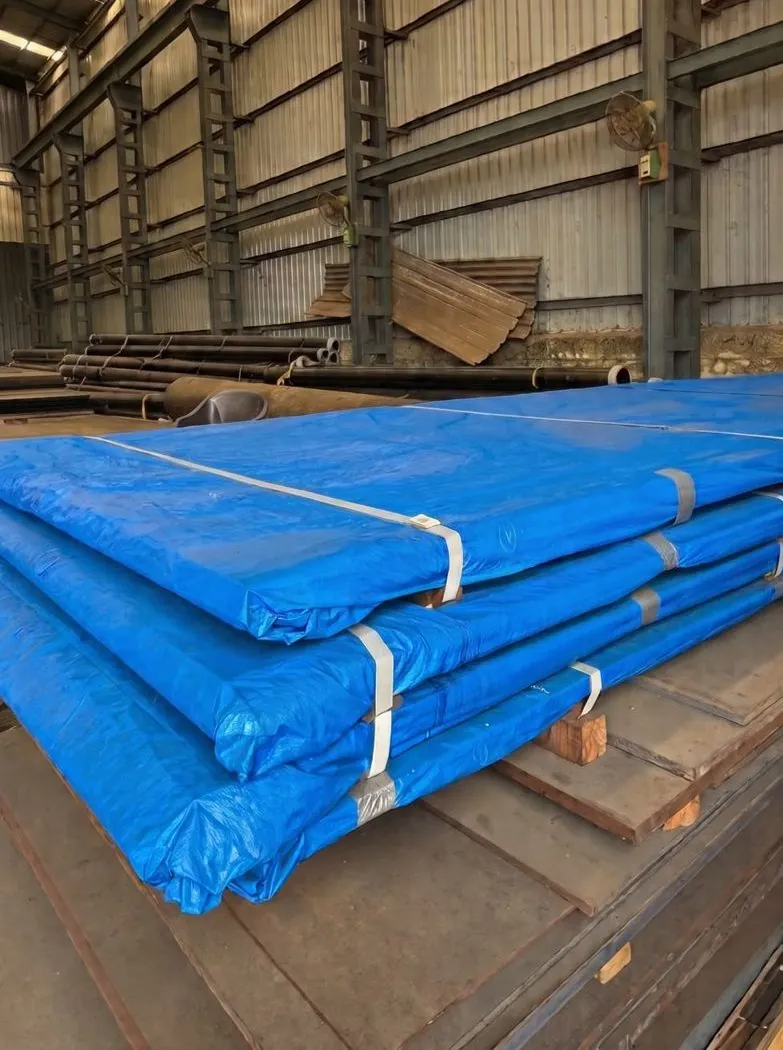
Why pollution-control service is so aggressive
An FGD absorber, quench zone, or wet scrubber combines several corrosion mechanisms at once. Condensing flue gas forms dilute sulfuric and hydrochloric acid, chlorides concentrate at the dewpoint, and temperatures swing across the plant. That mix drives pitting corrosion, crevice corrosion under deposits and gaskets, and sulfuric-acid attack on the base metal.
The single number that orders these grades by chloride resistance is the Pitting Resistance Equivalent Number. Understanding how PREN is calculated is the fastest way to size a grade against the chloride level in your scrubber.
The PREN ladder for scrubber duty
| Grade | Family | Approx. PREN | Where it fits in pollution control |
|---|---|---|---|
| 304 / 304L | Austenitic SS | ~18 | Dry ductwork, non-chloride zones only; pits in wet FGD |
| 316 / 316L | Austenitic SS | ~24 | Milder absorber zones, low-chloride condensate |
| 904L | Super-austenitic SS | ~34 | Acid-and-chloride duty, FGD absorbers, scrubber internals |
| Incoloy 825 | Ni-Fe-Cr alloy | ~31-40 | Mixed-acid, reducing acids, sour streams |
904L: the super-austenitic answer for FGD
904L stainless steel (UNS N08904, 1.4539) is a super-austenitic grade built for exactly this service. Its roughly 25% nickel, 4.5% molybdenum and 1.5% copper chemistry resists sulfuric acid, chloride pitting and crevice attack, and chloride stress-corrosion cracking far better than 316L. The copper addition is what gives 904L its edge in reducing acids, which is why it is a staple in sulfuric-acid plants, pulp and paper, and FGD scrubbers.
Nandini Steel is an ISO 9001:2015 certified specialist in 904L, with the grade named on our certified scope alongside Alloy 28, Incoloy 800 and Hastelloy. A common spec error is reaching for Alloy 20, Inconel 625 or titanium for sulfuric-acid and high-chloride duty when 904L's copper-bearing chemistry already covers it at lower cost. Check the acid concentration and temperature against the 904L iso-corrosion limits before paying for an upgrade. Conversely, do not under-spec 904L where 6-Mo or super-duplex is genuinely required.
| Attribute | 904L |
|---|---|
| UNS / Werkstoff | N08904 / 1.4539 |
| Family | Super-austenitic stainless |
| Nickel | ~25% |
| Molybdenum | ~4.5% |
| Copper | ~1.5% |
| PREN | ~34 |
| Conforms to | ASTM A240 / ASME SA-240 |
| Available as | Sheet, plate, coil |
Read what makes 904L super-austenitic for the full metallurgy, or go straight to 904L plate for absorber shells and internals. 904L needs an over-alloyed filler, so review how to weld 904L before fabrication.
316L for the milder zones
Where chlorides are low and the acid dewpoint is not reached, 316L stainless steel is the cost-effective choice. Its 2 to 3% molybdenum gives real pitting resistance that 304 lacks, and the low carbon content keeps the heat-affected zone corrosion-resistant after welding. The buyer's mistake is under-spec'ing 316L for hot concentrated chlorides where 904L is really needed, so confirm the condensate chemistry first.
See the full 904L vs 316L comparison to decide where the step-up pays off, and how to weld 316L for fabrication detail. For thin-gauge internals, 316L coil is held ex-stock.
Incoloy 825 and nickel alloys for mixed-acid and sour service
When the stream combines reducing and oxidizing acids, or carries H2S, a nickel-iron-chromium alloy earns its place. Incoloy 825 (UNS N08825) resists both reducing and oxidizing acids and is qualified for sour service under NACE MR0175 / ISO 15156, which is why it is chosen over 316L and 904L in mixed-acid pollution-control duty. Compare it against Inconel 625 when the duty is at the edge of the stainless envelope.
For the most severe acid condensate, Hastelloy C276 and Alloy 20 extend the range further, and both sit within our certified specialty.
Choosing between 904L and duplex
Duplex 2205 (PREN ~35) competes with 904L on chloride pitting but behaves differently in reducing acids and on weldability. The 904L vs duplex 2205 comparison lays out where each wins, and the grade selector tool walks you through the service variables.
Forms, standards and documentation
Pollution-control plate and sheet conform to ASTM A240 / ASME SA-240 for the stainless grades. Every order ships with an EN 10204 3.1 or 3.2 mill test certificate for full traceability from the heat to your fabrication. Nandini Steel supplies genuine mill material and holds all products ex-stock for immediate dispatch.
| Need | Grade | Typical form |
|---|---|---|
| FGD absorber shell, acid-and-chloride duty | 904L | Plate, sheet, coil |
| Scrubber internals, trays, spray headers | 904L / 316L | Sheet, coil |
| Low-chloride ductwork and milder zones | 316L | Plate, sheet, coil |
| Mixed-acid and sour streams | Incoloy 825 | Plate, sheet |
Related industries
The same grade logic carries into chemical processing, pulp and paper, and fertilizer and acid service, all of which draw on the same super-austenitic and nickel-alloy inventory.
Frequently asked questions
What grade of stainless steel is used in FGD scrubbers?
Why does 316L fail in some pollution-control service?
How does 904L resist sulfuric acid?
When should I upgrade from 904L to a nickel alloy?
Do you provide material certificates with pollution-control steel?
Request a quote
Tell us the scrubber zone, service chemistry, grade and form and we will quote from ex-stock. Contact Nandini Steel at reachus@nandinisteel.com, call +91 22 43404600, or WhatsApp +91 99202 09184 for live pricing and immediate dispatch.