
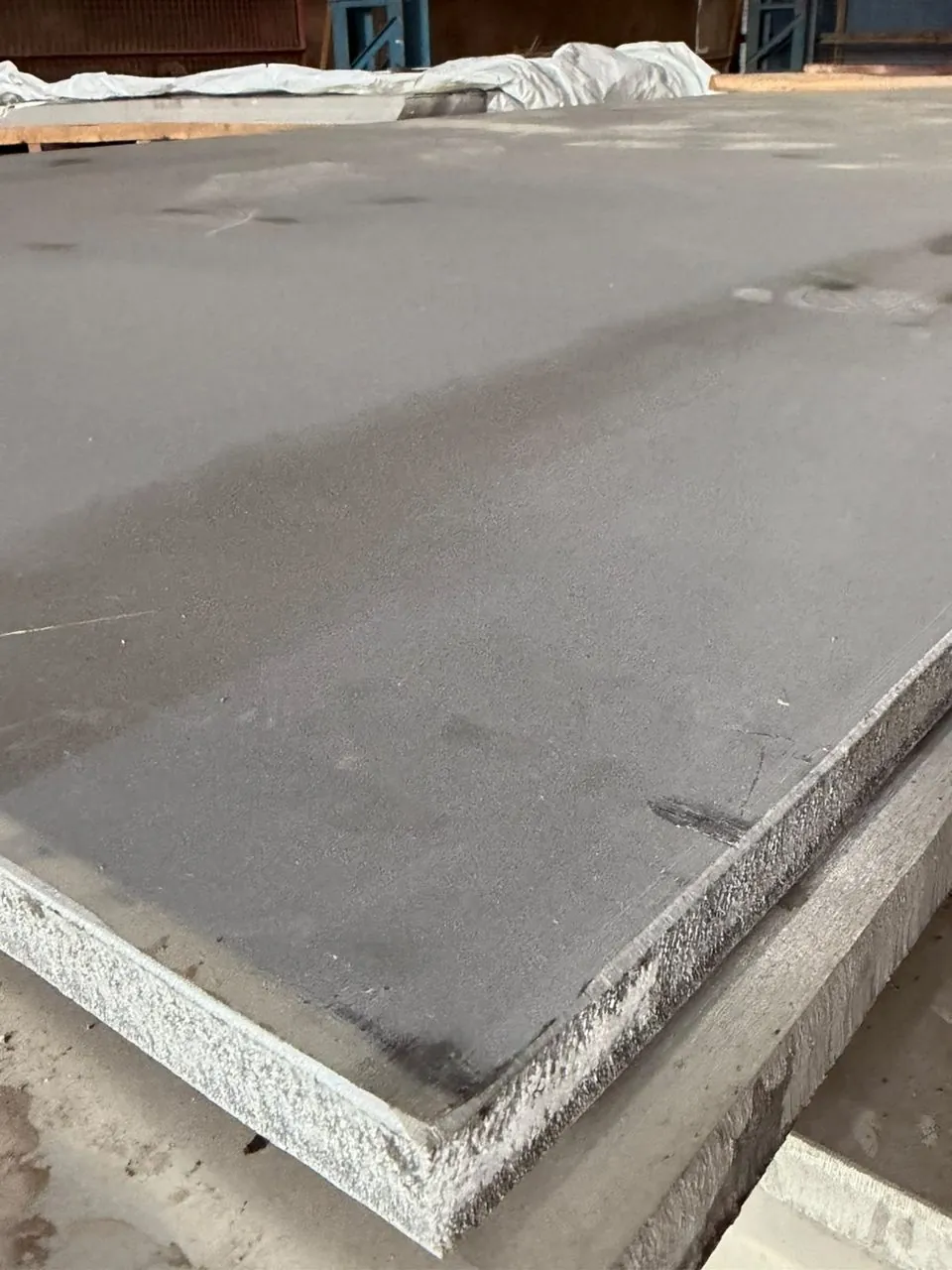
Inconel 718 at a glance
- Designation: UNS N07718, Werkstoff 2.4668, NiCr19Fe19NbMo3, commonly called alloy 718 or GH4169.
- Family: precipitation-hardenable (age-hardenable) nickel-chromium-iron superalloy, Ni 50–55%, strengthened by niobium.
- Strengthening: γ″ (Ni₃Nb), with secondary γ′ (Ni₃(Ti,Al)) coming along for the ride. Both precipitate out through solution annealing followed by double aging. That's the mechanism that separates 718 from solid-solution grades such as Inconel 625.
- Strength: ≥1275 MPa (185 ksi) tensile in the aged condition, held from cryogenic temperatures to about 700 °C.
- Behavior: resists oxidation and high-temperature corrosion, conforms to sour service (NACE MR0175), and remains weldable because its sluggish γ″ precipitation resists strain-age cracking.
- Supply: round bar, forgings, flanges, fasteners, pipe and sheet to AMS 5662 / ASTM B637, ex-stock for immediate dispatch, with an EN 10204 3.1/3.2 mill test certificate on every order.
What is Inconel 718?
Inconel 718 is a nickel-base superalloy from the Ni-Cr-Fe family, and unlike the solid-solution Inconel grades, it gets its strength from precipitation hardening rather than solid solution. During solution annealing and double aging, niobium combines with nickel to precipitate the coherent γ″ (Ni₃Nb) phase. γ′ (Ni₃(Ti,Al)) backs it up, and together they pin dislocations, pushing tensile and yield strength well past what 625 or austenitic stainless steel can manage.
You specify Inconel 718 when a part needs bolt-grade mechanical strength alongside 316/625-class corrosion resistance across a wide temperature range, from cryogenic service up to roughly 700 °C. The real practical edge is that γ″ precipitates slowly. That means 718 can be welded and then aged without the strain-age cracking that plagues γ′-rich superalloys. Curious where it fits among the Inconel and Hastelloy grades? See the nickel alloys family hub for context.
Chemical composition
Niobium forms the γ″ (Ni₃Nb) strengthening phase in UNS N07718 (composition per AMS 5662 / ASTM B637, weight %). Molybdenum adds solid-solution strength and pitting resistance. Titanium and aluminum, meanwhile, form the supporting γ′ phase.
| Element | Content (wt %) | Role |
|---|---|---|
| Nickel + Cobalt (Ni+Co) | 50.0 – 55.0 | Base, matrix for γ″/γ′ precipitation |
| Chromium (Cr) | 17.0 – 21.0 | Oxidation & corrosion resistance |
| Iron (Fe) | Balance (~17–20) | Matrix, lowers cost vs pure Ni base |
| Niobium + Tantalum (Nb+Ta) | 4.75 – 5.50 | Forms γ″ (Ni₃Nb), primary strengthener |
| Molybdenum (Mo) | 2.80 – 3.30 | Solid-solution strength & pitting resistance |
| Titanium (Ti) | 0.65 – 1.15 | Forms γ′ (Ni₃(Ti,Al)) |
| Aluminum (Al) | 0.20 – 0.80 | Forms γ′ (Ni₃(Ti,Al)) |
| Cobalt (Co) | ≤ 1.0 | Residual |
| Carbon (C) | ≤ 0.08 | Kept low to limit carbides |
| Manganese (Mn) | ≤ 0.35 | – |
| Silicon (Si) | ≤ 0.35 | – |
| Copper (Cu) | ≤ 0.30 | – |
| Phosphorus (P) | ≤ 0.015 | – |
| Sulfur (S) | ≤ 0.015 | – |
| Boron (B) | ≤ 0.006 | Grain-boundary strength |
Mechanical properties
Room-temperature minimums for precipitation-hardened (aged) material per AMS 5662. The aged condition is the standard structural condition, though the material can also be supplied solution-annealed for forming, with aging done after fabrication.
| Property | Aged (precipitation-hardened) minimum |
|---|---|
| Tensile strength | ≥ 1275 MPa (185 ksi) |
| Yield strength (0.2% offset) | ≥ 1035 MPa (150 ksi) |
| Elongation | ≥ 12% |
| Reduction of area | ≥ 15% |
| Hardness (typical) | ~36 – 44 HRC |
Physical properties
| Property | Value |
|---|---|
| Density | 8.19 g/cm³ |
| Melting range | ~1260 – 1336 °C |
| Elastic modulus | ~200 GPa |
| Thermal conductivity (RT) | ~11.4 W/m·K |
| Mean coefficient of thermal expansion (20–100 °C) | ~13.0 µm/m·°C |
| Magnetic response | Essentially non-magnetic at room temperature |
Density of 8.19 g/cm³ drives bar and plate weight. Use the steel plate weight calculator or the guide on how to calculate steel plate weight to convert a cut size to mass for an RFQ.
Heat treatment & corrosion/temperature behavior
Inconel 718 gets its properties from a two-step precipitation sequence: solution annealing, then double aging. A typical aging cycle runs about 720 °C for 8 hours, furnace-cooled, then 620 °C for 8 hours. That sequence precipitates the γ″ (Ni₃Nb) and γ′ phases, and those are what actually carry the load. Spell out the required condition on the purchase order, whether solution-annealed or fully aged, so the heat gets supplied correctly.
The alloy's chromium base, roughly 18–21%, gives it oxidation and high-temperature corrosion resistance. Supplied in the qualified, hardness-controlled condition, it conforms to NACE MR0175 / ISO 15156 for sour (H₂S-bearing) hydrocarbon service.
γ″ precipitates slowly, so Inconel 718 welds well and avoids the strain-age cracking that plagues γ′-strengthened superalloys. That's a big part of why fabricators reach for it on welded hardware.
For the underlying process, see solution annealing & heat treatment and the guidance on welding stainless and nickel alloys.
Equivalent grades & designations
| System | Designation |
|---|---|
| UNS | N07718 |
| Werkstoff (W.-Nr.) | 2.4668 |
| DIN | NiCr19Fe19NbMo3 |
| AMS | 5662 / 5663 (bar), 5596 (sheet/plate) |
| BS | HR8 |
| GB | GH4169 |
| AFNOR | NC19FeNb |
Cross-check the designations on the purchase order and the MTC against the UNS / W.-Nr. / JIS cross-reference before anything moves to receiving inspection. Buyers mix up alloy 718 with the GH4169 or 2.4668 callout more often than you'd think, and that mistake is exactly what triggers disputes down the line.
Available forms & sizes
Inconel 718 (N07718) sits ex-stock in both long and flat forms, ready to ship right away, in solution-annealed or aged condition depending on what the job calls for. Each form has its own product page, where you can check live stock and sizes.
| Form | Typical standard | Condition | Product page |
|---|---|---|---|
| Round bar | ASTM B637 / AMS 5662 | Solution-annealed or aged | Inconel 718 round bar |
| Fasteners & bolting | API 6A718 / AMS 5662 | Aged | Inconel 718 fasteners |
| Forged fittings | ASTM B564 / ASME B16.11 | Solution-annealed or aged | Inconel forged fittings |
| Flanges | ASME B16.5 / B564 | Aged | Inconel 718 flanges |
| Pipe & tube | ASTM B705 / B751 | Annealed | Inconel 718 pipe |
| Pipe fittings | ASTM B366 | Annealed | Inconel 718 pipe fittings |
| Sheet & plate | ASTM B670 / AMS 5596 | Solution-annealed | Inconel 718 sheet & plate (RFQ) |
Share the form, dimensions and required condition on your RFQ, and we'll confirm ex-stock availability along with the governing standard.
Standards & specifications complied
Inconel 718 ships against the relevant aerospace, ASTM and oilfield specifications, sorted by form:
| Scope | Specification |
|---|---|
| Bar & forgings (aerospace) | AMS 5662 / AMS 5663 |
| Sheet, plate & strip (aerospace) | AMS 5596 |
| Rod, bar & forgings (ASTM) | ASTM B637 |
| Welded & seamless tube (ASTM) | ASTM B775 (welded) / B751 (seamless) |
| Oilfield equipment (sour service) | API 6A718 |
| Sour-service qualification | NACE MR0175 / ISO 15156 |
For sour hydrocarbon service the heat is supplied in the qualified, hardness-controlled condition, see the NACE MR0175 / ISO 15156 standard page. API 6A718 adds the wellhead and subsea requirements for downhole and Christmas-tree hardware.
Applications
Aerospace gas turbines: compressor and turbine discs, blades, shafts, casings and fasteners that need to hold strength and creep resistance to about 700 °C. This is the single largest use of alloy 718.
Oil & gas (sour, downhole & subsea): wellhead components, downhole tools, hangers, valves and high-strength bolting per API 6A718 and NACE MR0175. See oil & gas.
Power generation & cryogenic: steam- and gas-turbine hardware, plus cryogenic tankage and rocket hardware, where 718 holds onto its strength and toughness even at very low temperatures.
Testing, inspection & certification
Every Inconel 718 order ships with an EN 10204 3.1/3.2 mill test certificate (MTC) that ties heat and cast numbers back to the physical material. See the EN 10204 3.1 mill test certificate for details. On request, we also provide positive material identification (PMI), hardness testing (HRC), ultrasonic (UT) inspection, and certification of the NACE MR0175 / API 6A718 heat-treat condition and hardness. For the complete inspection workflow, check testing, MTC, NDT & PMI.
A common buyer error is ordering plain "Inconel 718" without stating the condition. Solution-annealed and fully aged versions differ by roughly 500 MPa in tensile strength. So call out solution-annealed for forming or aged for structural duty, name the governing standard, and put any NACE hardness cap on the PO. Where welding's involved, specify it against how to prevent sensitization too, so the heat gets supplied right the first time.
Inconel 718 vs Inconel 625
Both are nickel-chromium superalloys, but they are strengthened differently. Inconel 625 is solid-solution-strengthened by molybdenum and niobium, giving excellent general corrosion (PREN ~51) and weldability without heat treatment, at about 827 MPa (120 ksi) tensile. Inconel 718 is precipitation-hardened to ≥1275 MPa (185 ksi), roughly 50% stronger, but relies on an aging cycle to reach that strength.
Pick 718 when strength matters: fasteners, rotating hardware, shafts, high-load downhole tools. Reach for 625 instead when corrosion resistance and fabricability are what count, think acid and seawater equipment. The short version: 625 handles corrosion, 718 handles strength.
FAQ
What is Inconel 718?
What is the chemical composition of Inconel 718?
How is Inconel 718 heat treated?
Inconel 718 vs Inconel 625, which is stronger?
Is Inconel 718 suitable for sour service?
Is Inconel 718 magnetic?
Does Nandini Steel supply a mill test certificate with Inconel 718?
Request a quote
Nandini Steel holds ISO 9001:2015 certification and works as a stockist and supplier of Inconel 718 (UNS N07718) in round bar, forgings, flanges, fasteners, pipe, tube and sheet. All of it sits ex-stock, ready for immediate dispatch. The mill material is genuine, sourced from producers such as Aperam, Outokumpu, Jindal, POSCO, Nippon Steel and JFE.
Every order ships with an EN 10204 3.1/3.2 mill test certificate.
- Phone: +91 22 43404600 · +91 9920209184
- WhatsApp: +91 99202 09184
- Email: reachus@nandinisteel.com
- GSTIN: 27ADJPA7240C1Z0
- Address: 25, Dreamland Building, 601, 6th Floor, Mama Parmanand Marg, Charni Road, Opera House, Girgaon, Mumbai, Maharashtra 400004, India
RFQ for live pricing. Send us the form, size, standard and condition (solution-annealed or aged) and we'll get back to you with availability. For traceability details, check our certifications and quality assurance pages, or just contact us directly.