What ASTM B564 Covers
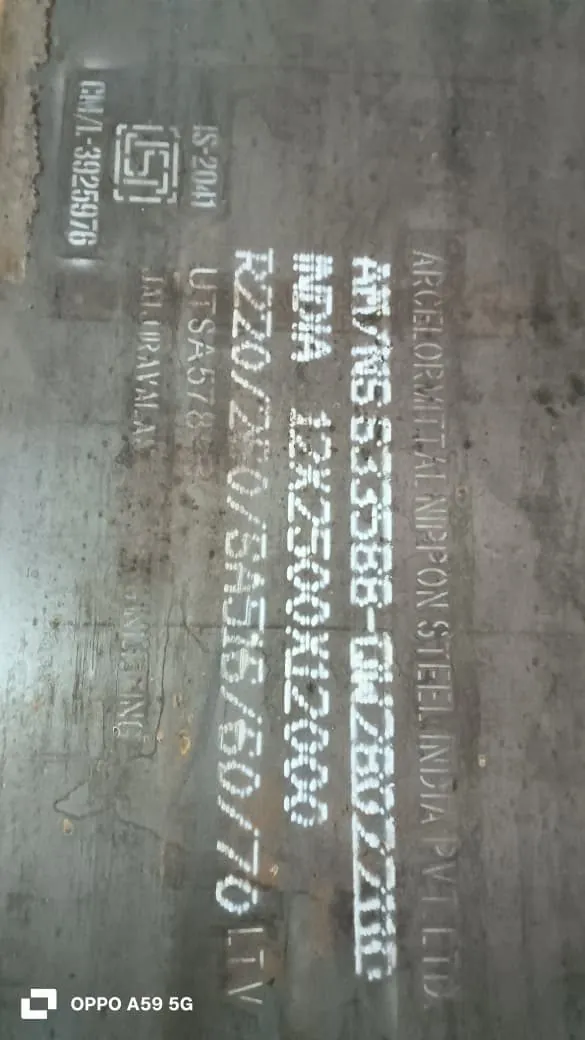
ASTM B564 is the product-form specification for hot-worked nickel-alloy forgings. Rather than defining a single grade, it is an umbrella standard that covers a family of nickel-base and nickel-iron-chromium alloys supplied in the forged condition: flanges, forged fittings, valve bodies, stub ends, tube sheets and similar pressure parts. For each alloy it fixes the chemical composition, the mechanical property minimums, and the heat treatment the forging is delivered in, so that the finished part carries the same metallurgy as the plate and bar made from the same chemistry.
The companion code edition is ASME SB-564, cited when a forged flange or fitting goes into an ASME Boiler and Pressure Vessel Code assembly. Buying to B564 with a mill test certificate is how a fabricator proves that a forged part actually meets the alloy chemistry and strength before it is welded into a vessel, a piping spool or a wellhead component.
Nickel Alloys Supplied as B564 Forgings
B564 groups several distinct corrosion-resistant alloys under one forging specification. The alloy you choose is driven by the service: sour gas, mixed acids, high-temperature oxidation or chloride pitting each point to a different chemistry. Each grade has companion specifications for its other product forms, which keeps a full scope of supply traceable to one metallurgy.
| Alloy (forging) | Family | Companion product specifications |
|---|---|---|
| Inconel 625 | Ni-Cr-Mo alloy | ASTM B443 plate/sheet, ASTM B446 bar, ASTM B366 fittings |
| Incoloy 825 | Ni-Fe-Cr alloy | ASTM B424 / B409 plate/sheet, ASTM B366 fittings |
| Incoloy 800 / 800H | Ni-Fe-Cr alloy | ASTM B409 plate/sheet |
| Inconel 600 | Ni-Cr alloy | Nickel-alloy flat and long product specs |
| Hastelloy C-276 | Ni-Mo-Cr alloy | ASTM B575 plate/sheet |
| 904L | Super-austenitic SS | ASTM A240 plate/sheet |
Chemical Composition of Key B564 Grades
The chemistry is what the forging is bought for. The two alloys below show the design logic clearly: Incoloy 825 is titanium-stabilized and carries copper for resistance to both reducing and oxidizing acids, while 904L is a copper-bearing super-austenitic grade built around a high molybdenum level for chloride and sulfuric-acid duty.
| Alloy | UNS | W.Nr. | Key alloying elements |
|---|---|---|---|
| Incoloy 825 | N08825 | 2.4858 | Ni 38–46%, Mo 2.5–3.5%, Cu 1.5–3%, titanium stabilized |
| 904L | N08904 | 1.4539 | Ni ~25%, Mo ~4.5%, Cu ~1.5% |
Inconel 625, the nickel-chromium-molybdenum grade frequently forged to B564, carries its full chemistry under ASTM B443 for the flat product and ASTM B446 for bar. Specifying the same UNS number across the forging and its mating plate or bar keeps the whole assembly on one metallurgy.
Supply Condition and Mechanical Properties
ASTM B564 forgings are delivered solution-annealed or annealed depending on the alloy and the intended duty, which is what restores corrosion resistance and sets the grain structure after hot working. The mechanical minimums for tensile strength, yield strength and elongation are defined per alloy and per condition inside the standard, so the heat treatment stated on the order governs the properties you receive.
The condition is not a detail to leave blank. For elevated-temperature creep service, grades such as Incoloy 800H and solution-annealed Inconel 625 are supplied grain-coarsened; for aqueous corrosion service the finer annealed temper is used. State the required condition on the purchase order so the forging is supplied in the qualified state rather than a default temper.
Corrosion Performance and Grade Selection
Forged nickel alloys are chosen where several corrosion mechanisms act at once. The Pitting Resistance Equivalent Number (PREN) gives an orderable sense of chloride resistance across the grades Nandini Steel stocks, and nickel-base chemistry adds resistance to chloride stress-corrosion cracking that attacks austenitic stainless steels.
| Grade | Approx. PREN | Resists |
|---|---|---|
| 316 / 316L | ~24 | General chloride service |
| 904L | ~34 | Sulfuric acid, chloride pitting and crevice attack |
| Incoloy 825 | ~31–40 | Sour service, reducing and oxidizing acids |
Incoloy 825 is the workhorse for sour oil and gas and mixed-acid duty, where its combined resistance to reducing and oxidizing media is why it is chosen over 316L or 904L. For sour service, cite NACE MR0175 / ISO 15156 on the order so the heat is supplied in the qualified condition. Inconel 625 is the pick when chloride pitting and high temperature combine, and Hastelloy C-276 covers the most aggressive wet-chemical environments. The nickel alloys explained primer and the Incoloy 825 vs Inconel 625 comparison walk through the trade-offs behind these choices.
Forms, Companion Standards and Related Products
A forged flange or fitting rarely stands alone. The same alloy is usually needed as plate, bar, buttweld fittings and flanges, all supplied ex-stock with matching certification so the whole spool is traceable to one metallurgy.
| Form | Specification |
|---|---|
| Nickel-alloy forgings | ASTM B564 / ASME SB-564 |
| Forged (socket-weld and threaded) fittings | ASME B16.11 |
| Forged or rolled stainless and alloy flanges and fittings | ASTM A182 |
| Wrought nickel-alloy buttweld fittings | ASTM B366 |
| Inconel 625 plate / bar | ASTM B443 / B446 |
| Incoloy 800 / 825 plate | ASTM B409 |
| Hastelloy C-276 plate | ASTM B575 |
For finished parts, see Nandini Steel's Inconel forged fittings, Hastelloy forged fittings, Inconel flanges and Inconel round bars. For the materials themselves, see Incoloy 825, Inconel 625, Inconel 600, Incoloy 800 and Hastelloy C-276. Related forged-product specifications include ASME B16.11 and ASTM A182.
Typical Applications
B564 forgings serve the industries where corrosion-resistant pressure parts are mandatory. Incoloy 825 and Inconel 625 forgings go into wellheads, manifolds and separators in oil and gas; nickel-alloy flanges and valve bodies run across chemical processing and petrochemical plants; and Hastelloy and 904L forgings handle acid and flue-gas duty in pollution control. For a buyer new to these alloys, the what is Incoloy 825 guide gives useful background.
Specifying and Ordering B564 Forgings
State five things on the purchase order: the specification (ASTM B564 or ASME SB-564), the alloy by UNS number, the delivered condition (annealed or solution annealed), the forging type and dimensions, and any supplementary testing such as NACE qualification, ultrasonic inspection or positive material identification. Every Nandini Steel order ships with an EN 10204 3.1 or 3.2 mill test certificate tying the forging back to its heat, so chemistry and mechanicals are traceable at receiving. Material is genuine mill product held in ready stock for immediate dispatch.
Frequently Asked Questions
What is ASTM B564?
What grades does ASTM B564 cover?
What is the difference between ASTM B564 and ASME SB-564?
Which condition should a B564 forging be supplied in?
Does Nandini Steel supply B564 forgings from stock?
Request a Quote
Need B564 forged flanges, fittings or valve parts in a specific alloy, condition and size? Contact Nandini Steel for live pricing and stock through our contact page or WhatsApp +91 99202 09184, and send your specification for a same-day RFQ.