Inconel 601 at a glance
- Designation: UNS N06601, Werkstoff 2.4851, NiCr23Fe, a solid-solution nickel-chromium-iron alloy.
Nickel-chromium forms the base, with 1.0–1.7% aluminum added on purpose to keep the protective scale stable. That's the signature chemistry here.
The point of it is simple: this alloy stands up to cyclic high-temperature oxidation and carburization at temperatures up to roughly 1250 °C. Stainless grades like 310 or 321 start scaling well before that.
- Standards: ASTM B168/B166/B167 (ASME SB-168/SB-166/SB-167), plus B366 fittings and B564 forgings.
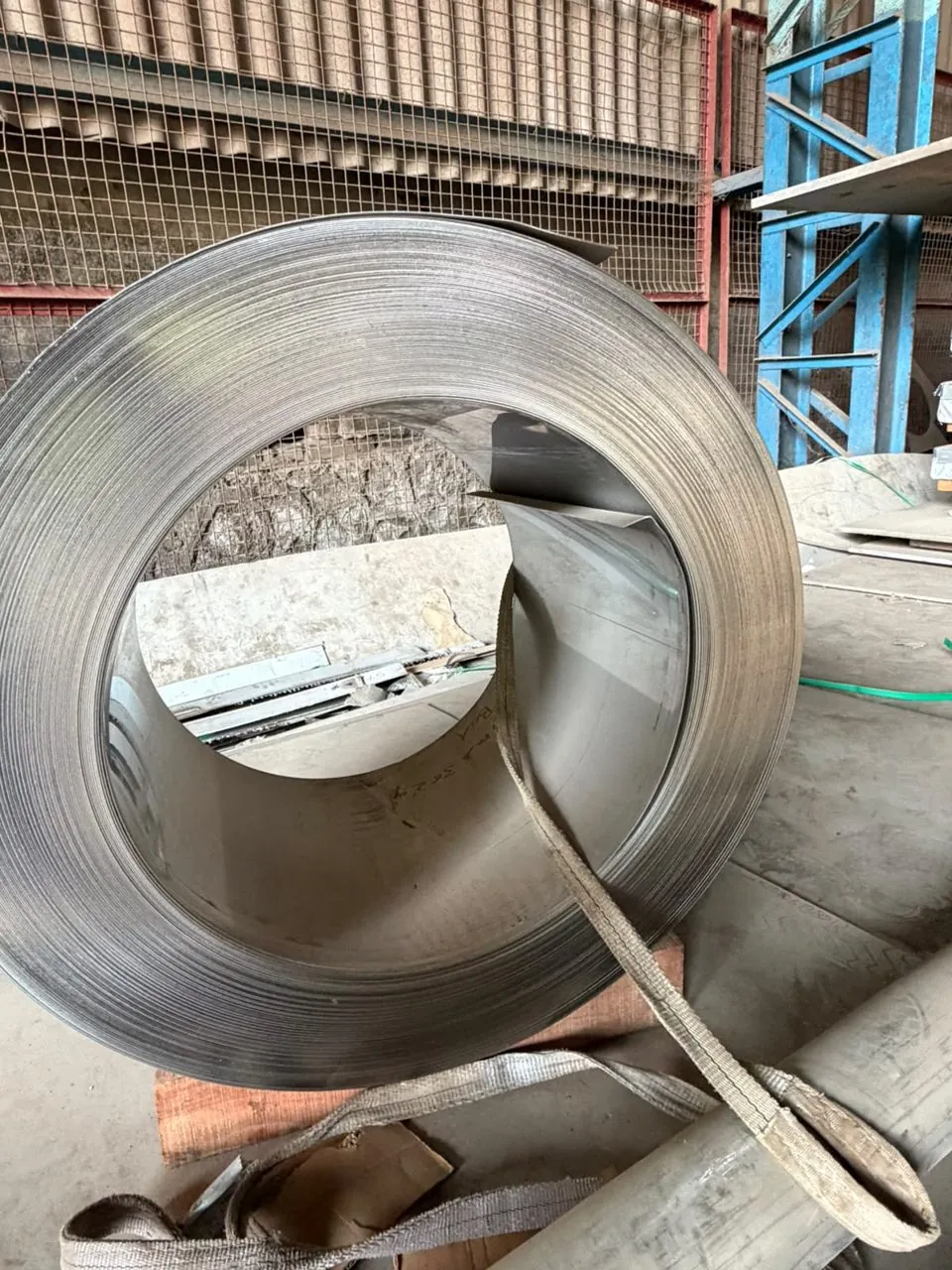
- Supply: plate, sheet, strip, round bar, pipe/tube, flanges, fittings and fasteners, ex-stock for immediate dispatch, with each heat shipped under an EN 10204 3.1/3.2 mill test certificate.
What is Inconel 601?
Inconel 601 is an aluminum-bearing member of the Ni-Cr-Fe family of nickel alloys, developed for service where the controlling requirement is high-temperature stability rather than aqueous corrosion. Its nickel base (about 58–63%) supplies metallurgical stability and resistance to chloride stress-corrosion cracking, while chromium plus the aluminum addition build a tenacious alumina-chromia scale that resists spalling under thermal cycling. It is, in practice, the oxidation-resistant upgrade from Inconel 600: the same solid-solution Ni-Cr backbone, with aluminum added specifically to improve scale adherence at temperature.
Chemical composition
Inconel 601 runs within the nominal wt% ranges shown below. Aluminum and chromium do the real work here, teaming up to form the adherent oxide that gives the alloy its high-temperature performance.
| Element | Content (wt%) |
|---|---|
| Nickel (Ni) | 58.0–63.0 |
| Chromium (Cr) | 21.0–25.0 |
| Aluminium (Al) | 1.0–1.7 |
| Iron (Fe) | Balance (remainder) |
| Carbon (C) | ≤ 0.10 |
| Manganese (Mn) | ≤ 1.0 |
| Silicon (Si) | ≤ 0.50 |
| Copper (Cu) | ≤ 1.0 |
| Sulphur (S) | ≤ 0.015 |
Mechanical properties
Typical room-temperature minima for solution-annealed N06601 plate and sheet, per ASTM B168.
| Property | Annealed minimum |
|---|---|
| Tensile strength | ≥ 550 MPa (80 ksi) |
| Yield strength (0.2% offset) | ≥ 195 MPa (28 ksi) |
| Elongation in 50 mm | ≥ 30% |
| Hardness | up to ~90 HRB |
Physical properties
| Property | Value |
|---|---|
| Density | 8.11 g/cm³ |
| Melting range | ~1300–1370 °C |
| Thermal conductivity (RT) | ~11.3 W/m·K |
| Mean coefficient of thermal expansion (20–100 °C) | ~13.75 µm/m·°C |
| Elastic modulus | ~207 GPa |
| Electrical resistivity | ~1.19 µΩ·m |
| Magnetic response | Essentially non-magnetic (permeability ≈ 1.0 at RT) |
High-temperature behavior: why Inconel 601 exists
The alloy's one standout property is how it holds up in hot, aggressive atmospheres. Aluminum addition builds up an alumina-rich sub-layer under the chromia scale, and that oxide clings to the surface through heating and cooling cycles instead of flaking off. The payoff is strong resistance to cyclic oxidation and to carburization, whether the environment is reducing or oxidizing, with a maximum continuous service temperature of roughly 1250 °C. Inconel 601 gets its strength from solid solution rather than precipitation, so it keeps useful mechanical properties and stays metallurgically stable even after long exposure at temperature.
High-temperature oxidation and carburization are the issue here, not pitting or sour service. For aqueous chloride pitting, sulfuric acid attack or sour-gas cracking, the grades that actually fit are Inconel 625, Incoloy 825 or Hastelloy C276. Inconel 601 gets specified for scale resistance at temperature. It isn't chosen for a high PREN.
Equivalent grades and designations
Cross-reference designations for N06601 across the common standards systems.
| System | Designation |
|---|---|
| UNS | N06601 |
| Werkstoff (W.-Nr.) | 2.4851 |
| DIN | NiCr23Fe |
| EN | NiCr23Fe |
| JIS | NCF 601 |
Available forms and sizes
Nandini Steel keeps Inconel 601 in stock across both flat and long product forms, all held ex-stock for immediate dispatch and backed by an EN 10204 3.1/3.2 certificate. Sizes vary by form and get confirmed on inquiry, so send through your thickness, diameter or schedule and request a quote.
| Form | Applicable standard | Supply |
|---|---|---|
| Plate, sheet, strip | ASTM B168 / ASME SB-168 | Ex-stock |
| Inconel round bar | ASTM B166 / ASME SB-166 | Ex-stock |
| Inconel pipe and tube | ASTM B167 / ASME SB-167 | Ex-stock |
| Inconel fittings and forged fittings | ASTM B366 / ASME B16.11 | Ex-stock |
| Inconel flanges | ASME B16.5 / B16.47 | Ex-stock |
| Inconel fasteners | Matched to component standard | Ex-stock |
Standards and specifications complied
Inconel 601 comes to the recognized ASTM and ASME specifications for N06601:
- ASTM B168 / ASME SB-168, nickel-alloy sheet, plate and strip.
- ASTM B166 / ASME SB-166, rod, bar and wire.
- ASTM B167 / ASME SB-167, seamless pipe and tube.
- ASTM B366, factory-made wrought fittings.
- ASTM B564, nickel-alloy forgings.
Mill plate on our orders is genuine stock from established producers like Aperam, Outokumpu, Jindal, POSCO, Nippon Steel and JFE. Every shipment comes with an EN 10204 3.1 mill test certificate (MTC), and full heat and cast traceability is included. PMI is available on request.
Inconel 601 vs the alternatives
Three grades compete most directly with Inconel 601 when a specifier is weighing options. The short answer: pick 601 when resisting cyclic oxidation and carburization at temperature is what matters most.
| Grade | Choose when |
|---|---|
| Inconel 600 | General Ni-Cr high-temperature service without the aluminum scale upgrade; 601 is preferred where cyclic oxidation and carburization resistance must be higher. |
| Incoloy 800 | Ni-Fe-Cr high-temperature duty where a lower-nickel, more economical alloy suffices; 601 holds a more adherent scale under severe cycling. |
| Inconel 625 | High strength and aqueous corrosion resistance are needed together; 625 is a Ni-Cr-Mo CRA, not an oxidation-first grade like 601. |
Applications of Inconel 601
Heat-treatment and thermal processing: muffles, retorts, baskets, trays, fixtures, radiant tubes and other furnace hardware that takes cyclic heating day after day.
Petrochemical and chemical processing: thermal-reactor components, catalyst-regenerator parts and radiant sections, the places where carburizing atmospheres chew through lesser alloys.
Power and waste: combustion hardware, waste-incineration equipment and other duty that pairs high temperature with flue atmospheres nobody would call forgiving.
Engineering-team note
A recurring purchasing mistake is mixing up Inconel 601 with Inconel 600, or with the higher-carbon 601H (N06601H) controlled-grain variant used in creep-governed service. These three aren't interchangeable. The 600 grade lacks the aluminum scale upgrade, while 601H gets specified wherever long-term creep strength is the governing factor. Confirm the exact UNS number and heat condition on both the purchase order and the mill certificate, so receiving inspection matches what the design actually calls for.
Frequently asked questions
What is Inconel 601 used for?
What is the maximum service temperature of Inconel 601?
What is the difference between Inconel 600 and 601?
Is Inconel 601 magnetic?
Which standards does Inconel 601 comply with?
Does Nandini Steel provide a mill test certificate with Inconel 601?
Request a quote
Nandini Steel has carried ISO 9001:2015 certification since it was founded in 2003, working as a stockist and supplier of Inconel 601 (UNS N06601) alongside a broader range of nickel alloys. Every form sits ex-stock, ready for immediate dispatch. Pricing runs on live RFQ, and each shipment comes with an EN 10204 3.1/3.2 mill test certificate.
- Phone: +91 22 43404600 · +91 9920209184
- WhatsApp: +91 99202 09184
- Email: reachus@nandinisteel.com
- Address: 25, Dreamland Building, 601, 6th Floor, Mama Parmanand Marg, Charni Road, Opera House, Girgaon, Mumbai, Maharashtra 400004, India
- GSTIN: 27ADJPA7240C1Z0