Steel specifications across construction, energy, and heavy manufacturing have shifted sharply toward high-strength grades. Engineers no longer default to conventional carbon steel for load-bearing or corrosive environments. A coil entering fabrication with inconsistent chemistry or thickness variation creates structural risk that downstream treatment cannot fully correct. Understanding that path helps procurement teams specify material that holds up as designs require.
What is an Alloy Steel Coil?
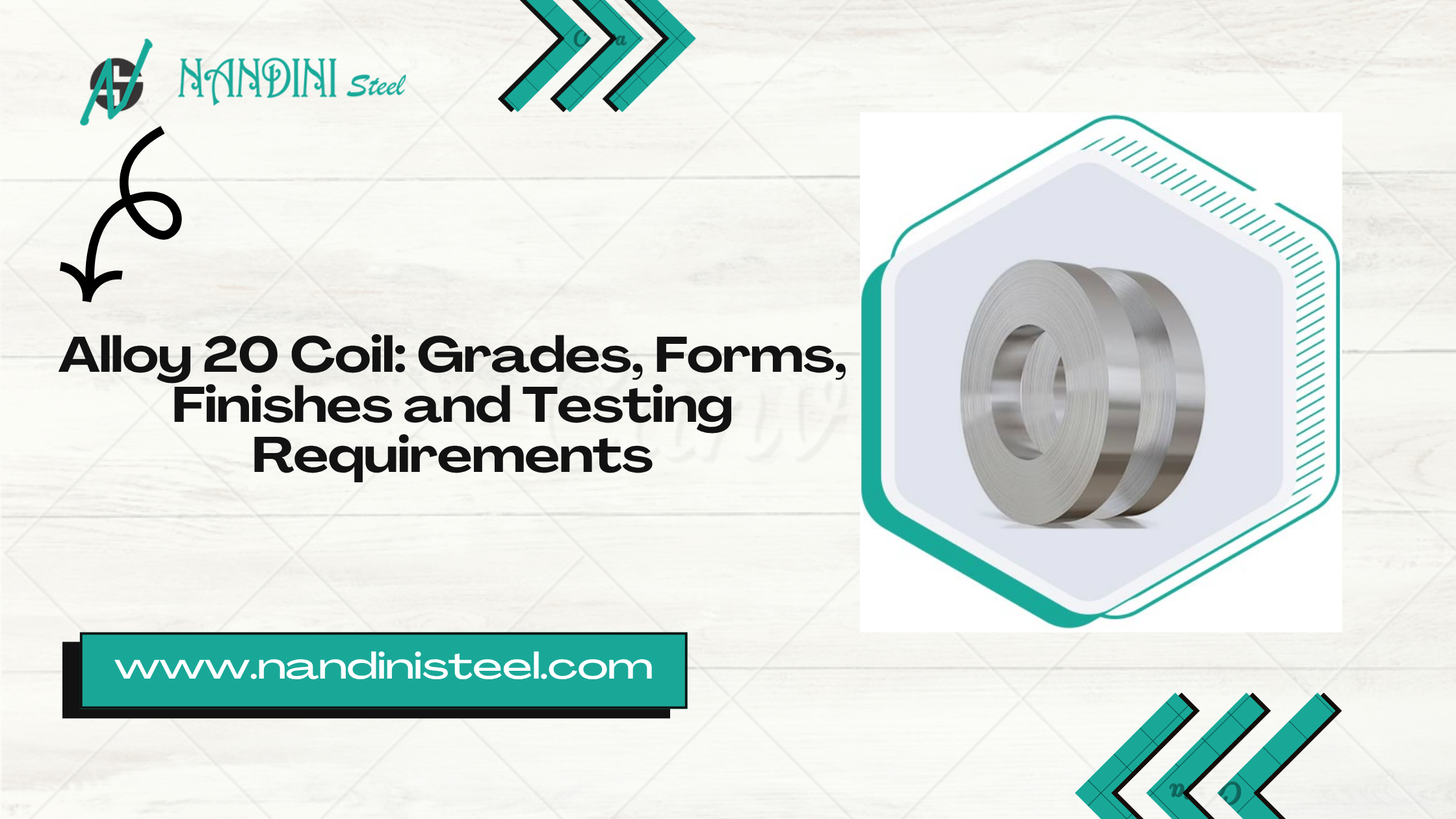
Alloy steel combines iron and carbon with controlled additions of chromium, molybdenum, nickel, manganese, and silicon. Those elements alter the crystalline structure and push performance beyond what carbon alone achieves. Carbon steel relies almost entirely on carbon to generate strength, limiting its usefulness once temperatures exceed 400°C or corrosive media are present. A coil is a continuous strip wound into cylindrical form, typically 0.5 mm to 12 mm thick and 600 mm to 2,000 mm wide. Oil and gas pipelines, pressure vessels, power generation, and heavy machinery fabrication all draw on alloy steel coil as primary feed material.
Raw Materials Used in Alloy Steel Coil Production
Base Steel Composition
The furnace charge combines iron ore or direct-reduced iron with graded steel scrap. Carbon targets 0.10% to 0.50% depending on grade; establishing this before alloying prevents composition drift.
Alloying Elements and Their Functions
Each addition serves a specific purpose. Chromium, at 0.50% to 18%, gives corrosion resistance and hardenability. Molybdenum 0.15% to 1.0% strengthens grain boundaries and maintains creep resistance above 500°C. Nickel 3.5% to 9% Improves toughness at sub zero temperatures for cryogenic grades. Manganese in the range of 0.60% to 1.65% deoxidizes the melt and increases hardenability without increasing brittleness. Silicon, at 0.15 to 0.60 percent, deoxidizes and controls resistivity in special grades.
Step-by-Step Alloy Steel Coil Manufacturing Process
Steel Melting and Refining
Scrap melts in Electric Arc Furnaces at 1,650°C with precise chemistry control for specialty grades. Liquid pig iron converts in Basic Oxygen Furnaces for high volume production. Both routes feed ladle furnaces and vacuum degassing units, bringing hydrogen below 2 ppm and sulfur below 0.010%.
Alloy Addition and Composition Control
Ferrochrome, ferromolybdenum, and ferronickel additions happen at the ladle furnace, with optical emission spectrometers returning full chemistry results in under 90 seconds to allow correction before casting.
Continuous Casting Process
Refined liquid steel flows through a water-cooled copper mold, solidifying through support rolls and water sprays into a slab 200 mm to 250 mm thick, eliminating the porosity problems of older ingot methods.
Hot Rolling Process
Slabs reheat to 1,100°C to 1,250°C before a roughing mill reduces them from 200 mm to roughly 25 mm. A finishing mill brings thickness to 2 mm to 12 mm across six or seven stands. Controlled cooling on the runout table then sets the final microstructure.
Pickling and Surface Cleaning
Scale from hot rolling is removed by acid pickling at 60°C to 80°C reducing surface roughness to below Ra 2.5 micrometers preparing the strip for cold rolling or dispatch.
Cold Rolling Process (When Required)
Cold rolling at room temperature improves the surface finish to Ra values of less than 0.8 micrometers and reduces the thickness tolerances to plus or minus 0.01 mm. Work hardening increases yield strength 30% to 50% above hot rolled levels through total reductions of 50% to 80%.
Heat Treatment and Annealing
Annealing at temperatures 650°C to 800°C allows recrystallization to replace deformed grains with stress-free grains.
Slitting and Coil Finishing
Slitting lines cut master coils to customer width requirements, holding tolerances of plus or minus 0.1 mm, and finished coils ship with mill test certificates for every production run.
Hot Rolled vs Cold Rolled Alloy Steel Coil Manufacturing
Hot rolled alloy steel coil carries a mill scale finish with tolerances of plus or minus 0.15 mm. Cold rolled material achieves Ra below 0.8 micrometers and tolerances of plus or minus 0.01 mm. AISI 4140 hot rolled exits the mill at yield strengths from 415 MPa upward. Cold rolled coil costs 15% to 30% more than hot rolled from the same grade. Structural frames and pressure vessels use hot rolled material where surface finish is secondary. Precision stampings and painted enclosures justify the cold rolled premium.
Quality Control Tests Performed on Alloy Steel Coils
Chemical Analysis: Optical emission spectrometry checks every heat against grade tolerances. One element outside range rejects the heat before casting.
Tensile Strength Testing: Coupons from each coil measure yield and tensile strength per ASTM A370. AISI 4140 normalized must clear 655 MPa tensile and 415 MPa yield.
Hardness Testing: Rockwell or Brinell readings confirm heat treatment outcomes and signal any processing deviation.
Impact Testing: Charpy V-notch specimens at 0°C or lower must absorb a 27-joule minimum average before coils ship to brittle-fracture-risk applications.
Ultrasonic Testing: Pulse-echo scanning detects laminations and inclusions across the full strip width without cutting the coil.
Dimensional Inspection: Laser gauges monitor thickness and width during rolling, with slit width verified on every finished coil.
Why Manufacturing Quality Matters in Industrial Applications
A pressure vessel made with 5% less chromium than specified will lose its corrosion resistance above 450°C. ASTM and ASME specifications specify minimum chemistry, mechanical performance, and dimensional accuracy that keep equipment operating safely through its design life. Uniform grain size throughout a full coil determines fatigue life in high cycle applications 20 to 30 year service expectations require material that performs predictably across every meter. Nandini Steel sources against ASTM and ASME specifications and ships with mill test certificates.
Industries That Depend on Manufactured Alloy Steel Coils
Construction and Infrastructure
High-strength low-alloy coil delivers consistent yield strength and toughness for bridge frames and structural connections.
Oil and Gas
Chromium-molybdenum grades handle pressure vessels and heat exchangers at temperatures above 550°C, where sour gas service requires hardness below 22 HRC.
Power Generation
Molybdenum-bearing grades retain their creep strength, while carbon steel loses 40% of ambient yield, thus providing for 25-year inspection intervals for boiler and turbine components.
Chemical Processing
Grades with nickel are resistant to stress corrosion cracking in acidic and caustic media and retain toughness at cryogenic service temperatures.
Heavy Equipment Manufacturing
Through-hardened grades at 400 to 500 Brinell supply wear-resistant material for excavator buckets, mining equipment, and crane structures.
Common Manufacturing Challenges and How Producers Address Them
Thickness variations can be caused by roll deflection, but crown on 1,500 mm widths is maintained below 0.05 mm by means of in-line profile feedback and roll bending. Scarfing the outer 3 mm to 5 mm before rolling removes slab-level surface defects. Composition inconsistency traces to scrap variability; certified grading programs keep chemistry predictable. Residual stress from cold work causes flatness problems that tension leveling corrects. Rust-preventive oil at 1 to 3 grams per square meter at the pickling line exit protects surfaces for up to twelve months in covered storage.
Future Trends in Alloy Steel Coil Manufacturing
AI-based vision systems scan strip in real time, cutting surface defect escape rates from 2% to 3% down to below 0.1%. Green hydrogen direct reduction replaces coal-based reductants in EAF steelmaking, cutting carbon dioxide output at commercial-scale pilots running since 2024. Regenerative burner systems recover combustion heat from reheating furnaces, cutting natural gas consumption by 15% to 20%. Smart manufacturing platforms link all process records into unified histories traceable to the source heat.
Conclusion
Nine manufacturing stages take alloy steel coil from raw charge to finished spool. Chemistry at the ladle furnace sets corrosion and creep resistance. Casting controls internal cleanliness. Rolling defines geometry and microstructure. Slitting delivers customer dimensions. Quality control at every step, from the spectrometry of the melt to the ultrasonic scan of the finished alloy steel coil, prevents sub-spec material from entering fabrication. For industrial buyers, that documented chain from raw charge to mill test certificate separates decades of reliable performance from early liability.