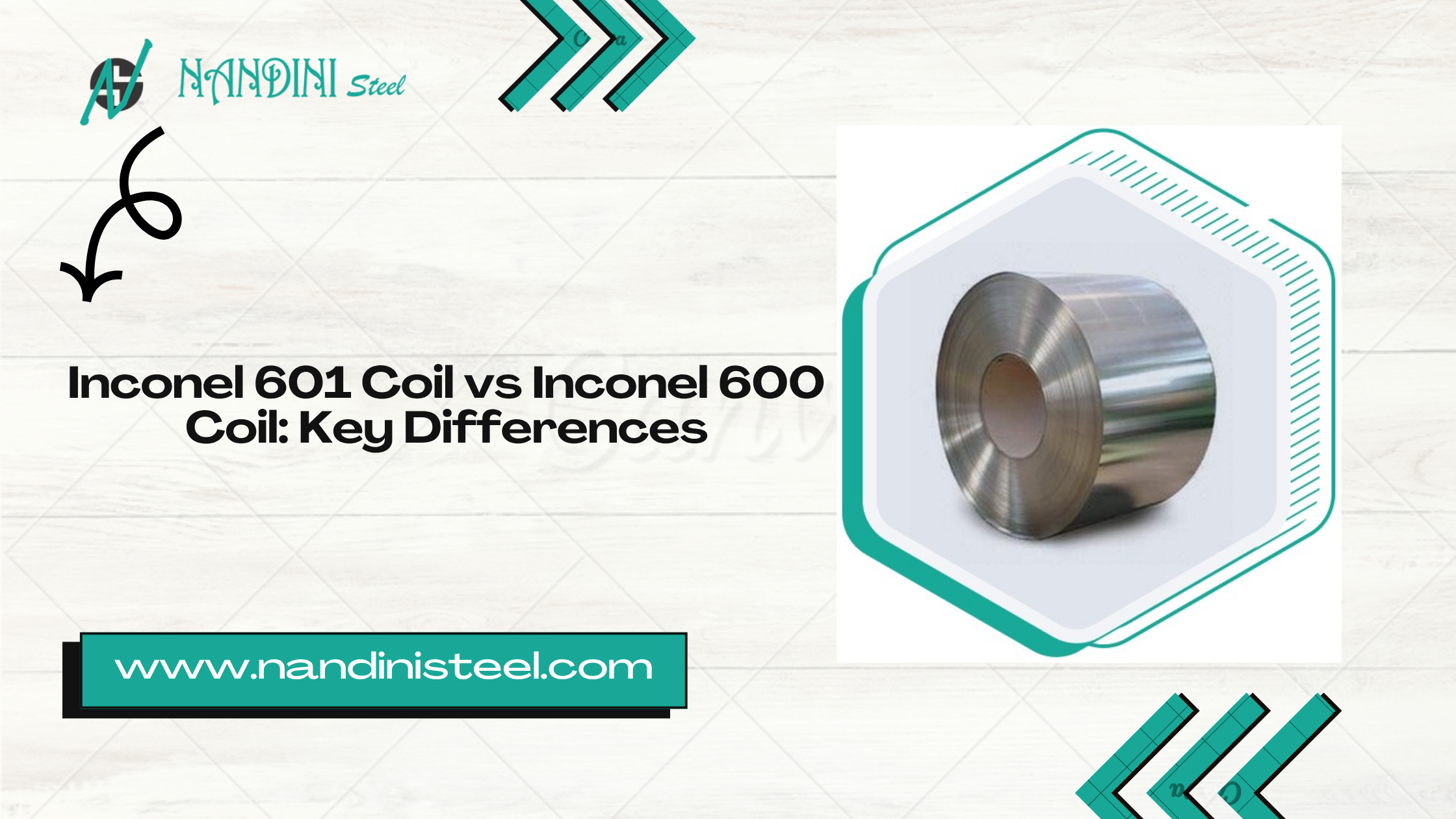
Inconel 600 and Inconel 601 share the same nickel-chromium base and both perform well in high-temperature, corrosive service. The difference that matters most on a specification sheet is aluminum. Inconel 601 contains a deliberate aluminum addition, and that single element pushes its oxidation resistance well beyond Inconel 600 at sustained high temperatures. For buyers comparing Inconel 601 Coil against its predecessor, this one distinction drives most of the selection logic.
Inconel 601 Coil vs Inconel 600 Coil: What Is the Difference?
Inconel 600 (UNS N06600) is a nickel-chromium alloy built around corrosion resistance and heat resistance across broad chemical and thermal environments. Inconel 601 (UNS N06601) shares that base but adds aluminum as a principal alloying element. That aluminum content is the core of the Inconel 600 vs. 601 comparison.
Both grades resist aqueous corrosion and handle thermal cycling reliably. Inconel 601 shows excellent resistance to oxidation through 2200°F (1204°C), plus solid resistance to aqueous corrosion and carburization. Inconel 600 was never built to chase that oxidation ceiling; its strength lies in a more even balance of corrosion and heat resistance across general service.
Chemical Composition Comparison of Inconel 600 and 601
Below is a comparison of the chemical composition of Inconel 600 and 601, along with UNS and key characteristics.
| Element / Property | Inconel 600 | Inconel 601 |
| UNS designation | N06600 | N06601 |
| Nickel | Major alloying element | Major alloying element |
| Chromium | High (approx. 14–17%) | High (approx. 21–25%) |
| Aluminum | Not a principal strengthening addition | Deliberate addition (approx. 1.0–1.7%) |
| Key characteristic | Corrosion and heat resistance | Enhanced oxidation resistance |
Aluminum matters because of what happens on the surface. During high-temperature exposure, aluminum in Inconel 601 forms a thin, protective aluminum-oxide scale that adheres tightly and resists spalling through repeated thermal cycles. Inconel 600 relies mainly on a chromium-oxide layer, which works well but doesn’t match that stability at the upper end of the temperature range.
Inconel 601 vs Inconel 600: High-Temperature Performance
Inconel 600 delivers strong heat resistance and holds up in many furnace-related applications; engineers have specified it for decades in exactly this kind of service. Inconel 601 was developed for a narrower purpose. Its aluminum-oxide scale resists spalling during thermal cycling better than a straight chromium-oxide layer, which matters in equipment that heats and cools repeatedly. In carburizing environments, where carbon migration degrades surface properties over time, 601 also tends to hold up better.
Reducing atmospheres and specific cycling patterns shift the calculation. The alloy targets oxidizing high-temperature conditions specifically.
Corrosion Resistance: Inconel 600 vs Inconel 601
Corrosion resistance splits into two mechanisms that get conflated too often: aqueous corrosion and high-temperature oxidation. In aqueous, chloride-containing environments, Inconel 600 resists chloride-ion stress corrosion cracking effectively.
Inconel 601’s advantage sits on the opposite side. Its Inconel 601 corrosion resistance profile is strongest in high-temperature oxidizing atmospheres and carburizing conditions, where the aluminum-oxide scale keeps performing cycle after cycle. Saying one alloy has better corrosion resistance overall misses the point; the service medium decides which grade will be used.
Fabrication and Formability Considerations
Both alloys respond to cold forming, bending, welding and cutting using standard industrial methods. For coil stock, thickness, bend radius and final part geometry matter more than the alloy choice alone. Thinner gauges cold-form without major difficulty in either grade, though work-hardening builds faster with tight radii and repeated passes. Welding follows conventional nickel-alloy practice, and post-weld heat treatment may apply depending on service temperature. These factors affect lead time and processing cost once the coil enters fabrication.
When Should You Choose Inconel 601 Coil?
Inconel 601 Coil fits applications driven by high-temperature oxidizing atmospheres: furnace components, heat-treatment equipment and thermal-processing equipment that cycle repeatedly through elevated temperatures. Where carburization is also a concern alongside oxidation, 601’s composition gives it an edge 600 wasn’t built to match. This isn’t an exhaustive list, and a full specification review should confirm fit before ordering.
When Is Inconel 600 Coil the Better Choice?
Inconel 600 Coil remains the right choice when the priority combines corrosion resistance, heat resistance and chloride-ion stress corrosion cracking resistance. General chemical-processing service, where aqueous exposure matters as much as high-temperature oxidation, tends to favor 600. Even in high-temperature environments, if 601’s enhanced oxidation performance isn’t the deciding factor, 600’s broader corrosion profile can be the more practical choice.
Inconel 601 Coil vs Inconel 600 Coil: Which Should You Choose?
Choose Inconel 601 Coil when enhanced high-temperature oxidation resistance and resistance to carburizing environments are major requirements.
Choose Inconel 600 Coil when broad corrosion resistance and heat resistance are needed without a specific requirement for 601’s enhanced oxidation performance.
Final selection should weigh temperature, atmosphere, chemical exposure, mechanical requirements, fabrication method and applicable material specification together.
Conclusion
Inconel 600 and Inconel 601 overlap significantly in corrosion resistance and general heat resistance, but the aluminum content in 601 makes it the more targeted choice for severe high-temperature oxidation and carburizing service. Inconel 600 remains a proven option wherever broad corrosion resistance and dependable heat resistance are the priority. Nandini Steel supplies both grades with ASTM and ASME-compliant mill test certifications on every shipment. Browse our Inconel 601 Coil range for current stock, or check the Inconel 600 Coil page if broad corrosion resistance fits your application better.