Alloy 20, also known as UNS N08020, is a nickel-iron-chromium alloy designed for use in sulphuric acid and other highly corrosive process environments. Buyers sourcing coil material for tank linings, agitators, or piping components need more than a chemistry printout. Grade confirmation, form selection, surface condition, and testing sign-off all affect whether the material performs once it reaches the fabrication floor. Get one wrong, and rework costs stack up fast. This page covers what to verify before placing an order for Alloy 20 Coil.
Alloy 20 Coil Grades and Designations
UNS N08020 is the standard designation used across mill certificates and purchase orders for this alloy. Trade names appear in supplier catalogues too, but the UNS number cross-checks correctly against chemistry limits. Coil is typically ordered against a flat-rolled nickel alloy specification, and buyers should confirm which edition the mill certifies at the time of order. Editions may be superseded or withdrawn without much notice. Do not assume a spec number on an old datasheet still applies. Ask the supplier directly to get the edition written into the PO.
Alloy 20 Coil Forms and Dimensions
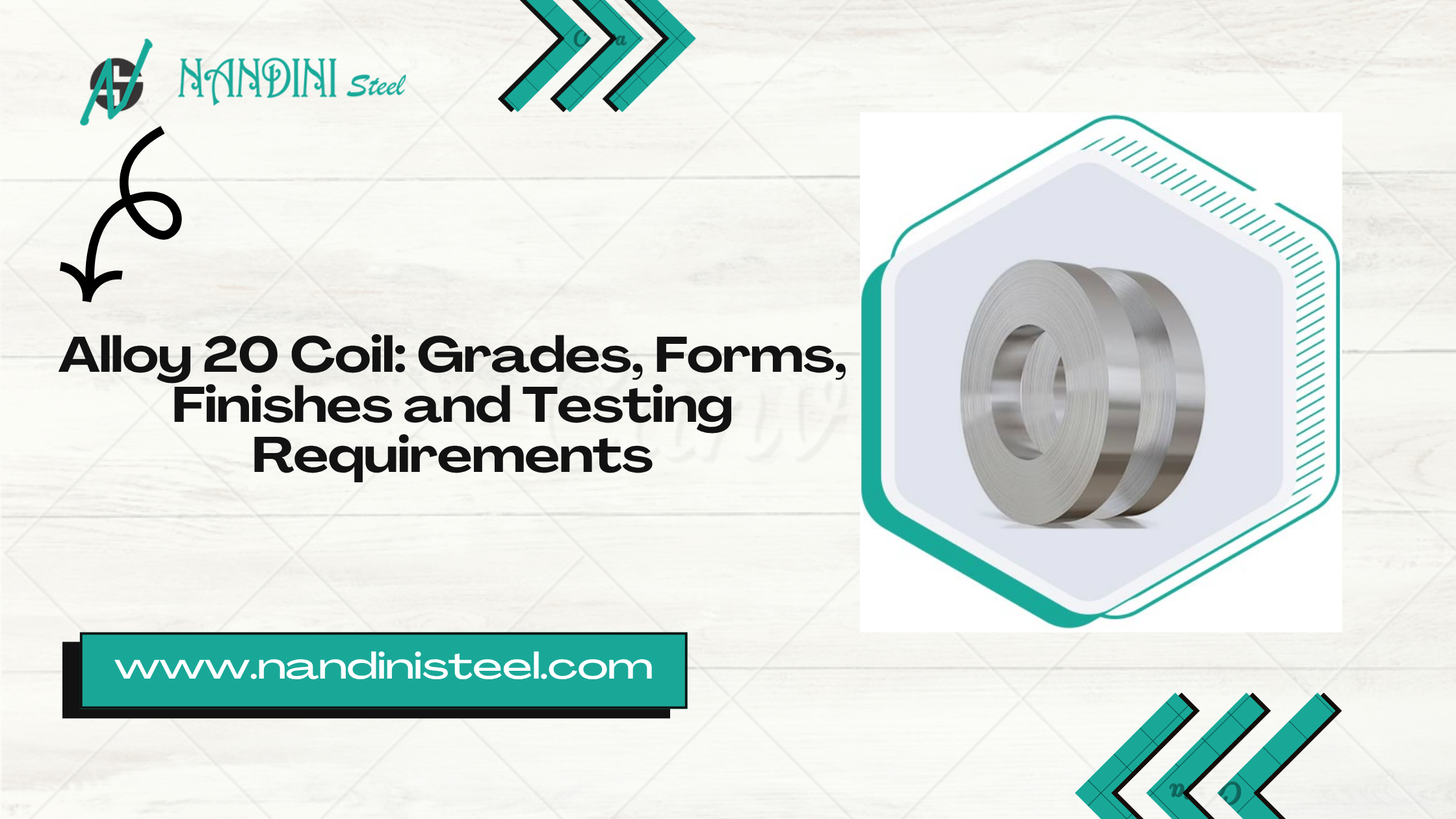
Alloy 20 coil is generally available as coil and strip, with slit or rolled edge options depending on the mill’s production. Thickness and width need to match the downstream process, not just what is in stock. A shop running deep-draw work wants a different gauge tolerance than one doing simple roll-forming. Custom widths and thicknesses can often be arranged, but lead time shifts once you move off standard stock sizes. Match the form to the fabrication route before ordering, not after.
Alloy 20 Coil Finishes and Surface Requirements
Surface condition matters as much as chemistry for corrosive service equipment. Buyers should specify the hot-rolled or cold-rolled condition and the finish needed: a mill finish for structural work or a smoother finish for product-contact surfaces. The pickled and annealed condition is common for corrosion service parts, as it removes scale that can cause localised attacks. State the step that follows welding, forming, or polishing so the coil arrives ready for it without extra prep.
Testing and Documentation for Alloy 20 Coil
The test depends on the applicable specification and the PO, not a fixed list. Chemical composition and mechanical property verification are standard through the mill certificate. Hardness checks, PMI, and non-destructive testing may apply where the project spec calls for them, but none should be assumed mandatory by default. Heat and lot traceability matter for regulated or pressure-retaining work. Confirm which tests apply before the coil ships and ensure this is documented in the order.
Alloy 20 Coil Selection for Corrosive Service
Alloy 20 corrosion resistance is why this material gets specified, particularly for sulfuric acid handling, where standard stainless grades corrode too fast. Exact service limits depend on concentration, temperature, and contaminants present, so those figures should come from the supplier, not a general assumption. Alloy 20 vs Alloy 28 comes up when service conditions sit near the edge of Alloy 20’s range. Alloy 28 is considered for tougher acid duty, but that call needs project-specific verification, not a blanket rule.
What Buyers Should Verify Before Ordering Alloy 20 Coil
A short checklist helps avoid delays and mismatched material once the coil arrives at the shop.
- Confirm the UNS designation matches the application requirement.
- Check which product specification and edition the mill certifies against.
- Confirm whether coil or strip suits the fabrication process.
- Verify thickness and width against equipment or tooling limits.
- Specify the surface finish needed for the end-use environment.
- State the required supply condition, hot-rolled or cold-rolled.
- List the exact testing and documentation required by the project.
- Request heat and lot traceability for pressure-retaining work.
- Flag project-specific or code requirements before the mill runs.
FAQs
What is Alloy 20 coil also known as?
Alloy 20 coil is most commonly referenced by its UNS designation, N08020. Trade names show up in supplier catalogues, but N08020 is the number that cross-references correctly across mill certificates and specifications.
Which form and finish should be specified for Alloy 20 coil?
That depends on the fabrication route. The coil or strip, plus the hot-rolled or cold-rolled condition, should match the equipment and forming process planned for the material, not just what happens to be in stock.
What testing documentation should buyers request for Alloy 20 coils?
At minimum, request a mill test certificate covering chemical composition and mechanical properties. Additional testing, such as PMI, hardness, or non-destructive examination, applies only where the project spec or PO calls for it.
How does Alloy 20 compare with Alloy 28 for corrosive service?
No, they are not interchangeable by default. Alloy 28 is considered for tougher acid duty than Alloy 20 typically handles, but that choice needs verification against actual process conditions before ordering.