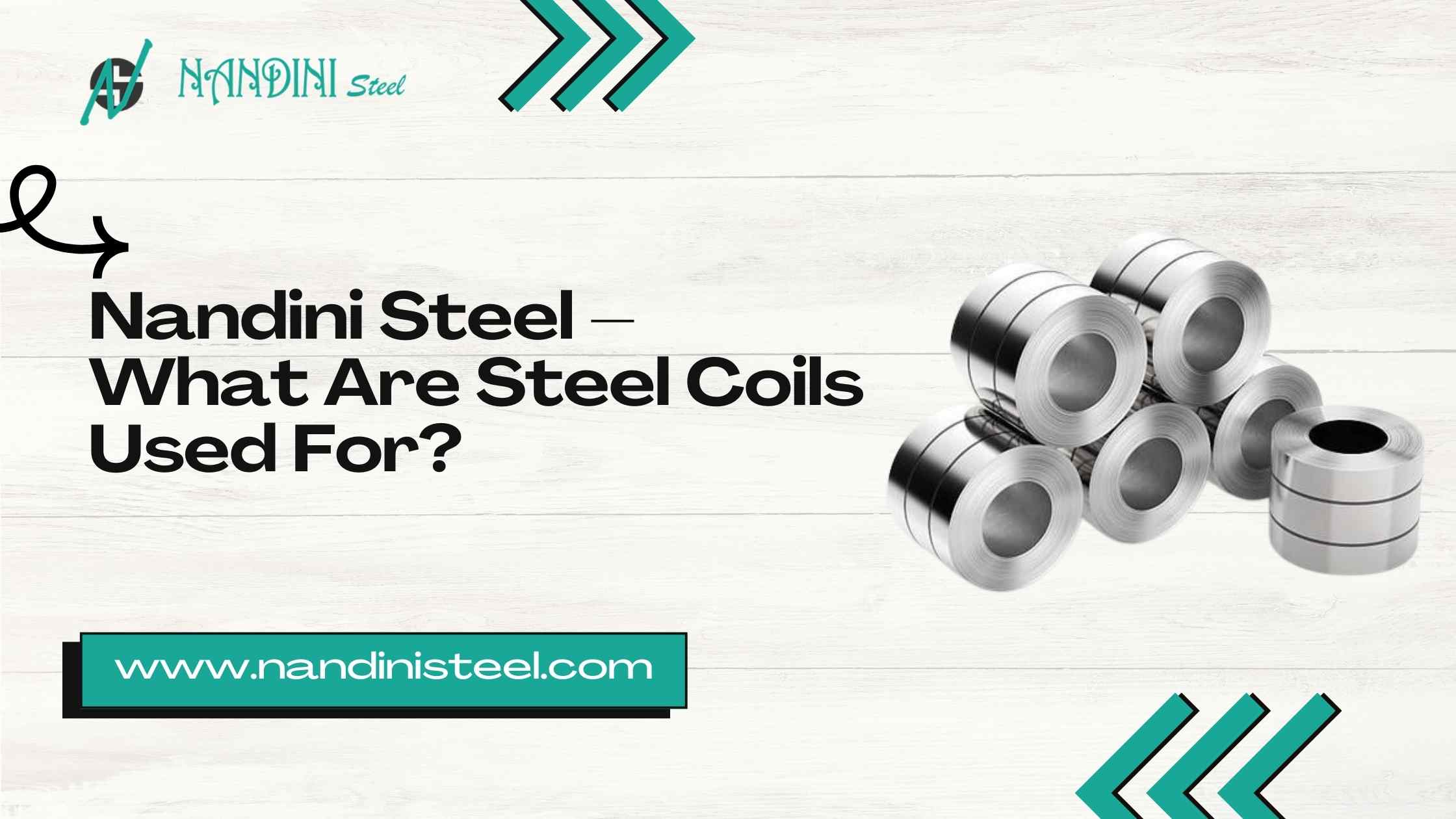
Steel coils are among the most essential and versatile steel products used across industries worldwide. From large-scale infrastructure projects to precision-engineered consumer goods, steel coils form the backbone of modern manufacturing and construction. Their adaptability, strength, and cost-efficiency make them a preferred raw material for multiple sectors.
At Nandini Steels, steel coils are supplied to meet diverse industrial needs, ensuring consistent quality, reliable performance, and compliance with industry standards. This detailed guide explains what steel coils are used for, how they are manufactured, and why they remain critical to industrial growth.
What Are Steel Coils?
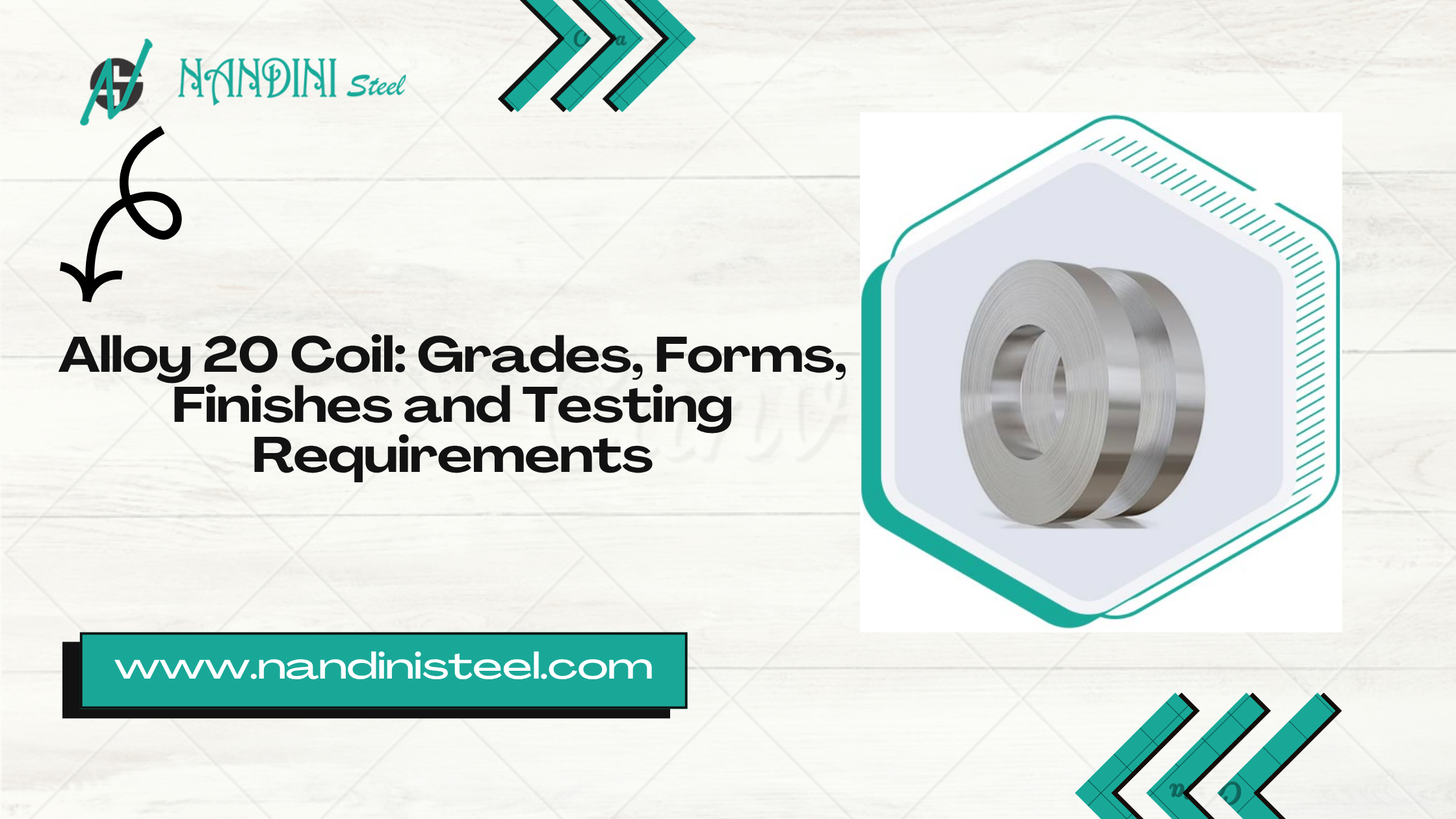
Steel coils are flat-rolled steel products manufactured by passing steel slabs through rolling mills and winding the finished material into coils. This form allows easy transportation, storage, and further processing. Stainless Steel coils can be slit, cut, bent, welded, or formed into finished products based on application requirements.
Steel coils are available in various thicknesses, widths, grades, and surface finishes, allowing them to serve both heavy-duty and precision-based industries.
Types of Steel Coils and Their Purpose
Different industrial applications require different types of steel coils. The most commonly used types include:
⦿ Hot Rolled Steel Coils (HR Coils)
Produced at high temperatures, hot rolled steel coils are known for their strength and toughness. They are typically used where surface finish and tight tolerances are not critical.
Key uses: structural fabrication, pipes, frames, and heavy machinery.
⦿ Cold Rolled Steel Coils (CR Coils)
Cold rolled steel coils undergo additional processing at room temperature, resulting in better surface finish, higher strength, and precise dimensions.
Key uses: automotive panels, appliances, furniture, and electrical enclosures.
⦿ Galvanized Steel Coils (GI Coils)
Galvanized steel coils are coated with zinc to protect against corrosion, making them ideal for outdoor and moisture-prone environments.
Key uses: roofing sheets, fencing, ducts, and water-related applications.
⦿ Pre-Painted Galvanized Steel Coils (PPGI)
These coils are color-coated for enhanced corrosion resistance and aesthetics.
Key uses: building cladding, decorative panels, and architectural structures.
⦿ Stainless Steel Coils
Stainless steel coils offer excellent corrosion resistance, hygiene, and durability.
Key uses: food processing equipment, chemical plants, medical devices, and premium architectural projects.
Major Industrial Uses of Steel Coils
1. Construction and Infrastructure Development
The construction industry is one of the largest consumers of steel coils. Steel coils are processed into sheets, profiles, and sections used in residential, commercial, and industrial buildings.
Common construction applications include:
- Roofing and wall cladding sheets
- Structural beams and columns
- Purlins, decking sheets, and sheds
- Bridges, flyovers, and infrastructure frameworks
Galvanized and coated steel coils are especially valued for their long lifespan and low maintenance in outdoor environments.
2. Automotive Industry
Steel coils play a vital role in automobile manufacturing due to their strength-to-weight ratio and formability. Cold rolled and galvanized steel coils are widely used to produce both structural and aesthetic vehicle components.
Applications include:
- Body panels, doors, and roofs
- Chassis and underbody components
- Fuel tanks and exhaust systems
- Safety reinforcements
Steel coils help automotive manufacturers meet safety standards while maintaining fuel efficiency and durability.
3. Manufacturing and Metal Fabrication
Steel coils serve as a primary raw material for general manufacturing and fabrication industries. Their uniform thickness and mechanical consistency make them ideal for mass production.
They are used in manufacturing:
- Industrial machinery parts
- Storage racks and shelving systems
- Metal cabinets, lockers, and enclosures
- Fasteners, brackets, and fabricated components
At Nandini Steels, steel coils are supplied with consistent quality to ensure smooth fabrication and minimal material wastage.
4. Electrical and Electronics Industry
In the electrical sector, steel coils are used for both functional and protective components. Cold rolled steel coils are preferred due to their smooth finish and dimensional accuracy.
Typical applications include:
- Electrical panels and control boxes
- Transformer enclosures
- Switchgear cabinets
- Cable trays and conduits
Steel coils provide mechanical protection and help maintain safety standards in electrical installations.
5. Home Appliances and Consumer Goods
Many everyday household appliances are manufactured using steel coils. Cold rolled and coated steel coils are commonly used because they can be easily shaped, painted, and finished.
Applications include:
- Refrigerators and washing machines
- Air conditioners and ovens
- Microwave panels and internal frames
- Office furniture and storage units
Steel coils ensure durability, structural stability, and long service life in consumer products.
6. Oil, Gas, and Energy Sector
The oil and gas industry relies on steel coils for heavy-duty and high-pressure applications. Hot rolled steel coils are commonly used in this sector due to their strength and toughness.
Steel coils are used to manufacture:
- Pipes and tubes
- Storage tanks and pressure vessels
- Structural components for refineries and power plants
Their ability to withstand extreme conditions makes steel coils indispensable in energy infrastructure.
7. Agriculture and Industrial Equipment
Steel coils are widely used in agricultural machinery and industrial equipment manufacturing. Their strength and formability allow them to be shaped into complex components.
Applications include:
- Tractor parts and farming implements
- Storage silos and sheds
- Conveyor systems and material-handling equipment
Galvanized steel coils are particularly useful in agriculture due to their resistance to moisture and corrosion.
8. Packaging and Transportation
Steel coils are also used in packaging and logistics applications where strength and safety are essential.
They are used to produce:
- Steel drums and barrels
- Industrial containers
- Pallets and transport bins
These products ensure secure handling and transportation of goods, including hazardous materials.
Advantages of Using Steel Coils
Steel coils offer multiple benefits that make them a preferred choice across industries:
- High strength and durability
- Excellent flexibility and formability
- Cost-effective for large-scale production
- Available in corrosion-resistant finishes
- Easy storage, handling, and transportation
These advantages contribute to reduced production costs and long-term performance.
Why Choose Nandini Steels?
Nandini Steels is committed to supplying high-quality steel coils tailored to industrial and commercial requirements. With a focus on material reliability, dimensional accuracy, and timely delivery, the company supports industries ranging from construction and automotive to manufacturing and energy.
By offering steel coils in various grades, sizes, and finishes, Nandini Steels ensures dependable solutions that meet both technical specifications and project demands.
Conclusion
Steel coils are a foundational material in modern industry, enabling the production of infrastructure, vehicles, machinery, and everyday products. Their versatility, strength, and efficiency make them essential across multiple sectors. Understanding what steel coils are used for helps industries select the right material for performance, durability, and cost-effectiveness.
With consistent quality and industry-focused solutions, Nandini Steels continues to play a vital role in supplying steel coils that support industrial growth and long-term reliability.